Why El Salvador Is Rethinking Its Bitcoin Strategy
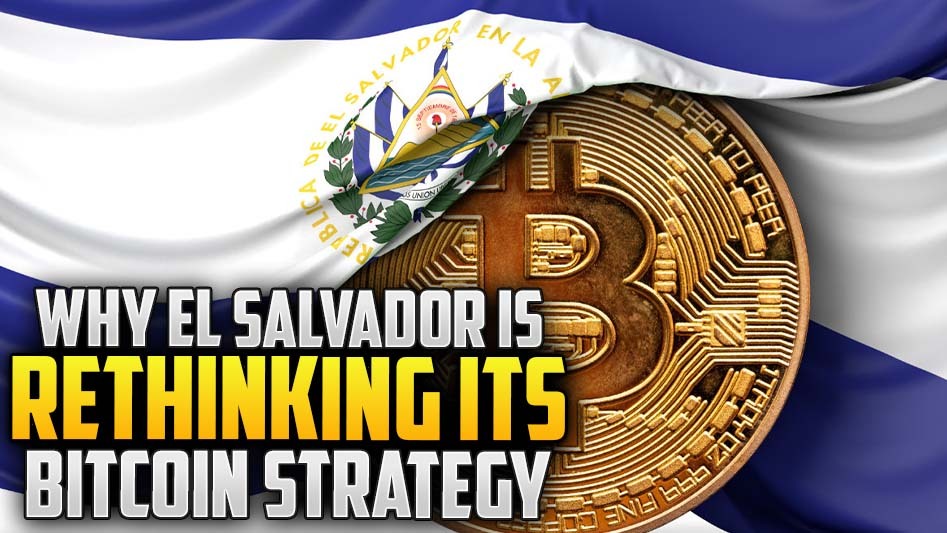
In 2021, El Salvador made history as the first country to adopt Bitcoin as legal tender, a move that sparked global debate about the role of cryptocurrencies in national economies. President Nayib Bukele promoted the initiative as a way to boost financial inclusion, attract investment, and reduce reliance on the U.S. dollar. However, just four years later, the country is scaling back parts of its Bitcoin policy while still maintaining its overall commitment to the cryptocurrency.
This shift raises important questions: Why is El Salvador rethinking its Bitcoin strategy? What are the economic and political factors behind this decision? And what does the future hold for the country's crypto experiment?
Table of Contents

From Legal Tender to Limited Use
Recent legislative changes passed by El Salvador’s Legislative Assembly have redefined the role of Bitcoin in the country. The key revisions include:
These adjustments signal a partial retreat from Bukele’s ambitious vision of a Bitcoin-powered economy.
IMF Influence and Economic Pressures
One of the biggest drivers of this policy shift is El Salvador’s financial relationship with the International Monetary Fund (IMF). The government is negotiating a $1.4 billion Extended Fund Facility loan, and one of the IMF’s conditions was for El Salvador to reduce the risks associated with its Bitcoin project.
The IMF has been vocal in its criticism of El Salvador’s Bitcoin adoption since 2021, citing concerns such as:
By rolling back some of its Bitcoin policies, El Salvador is addressing these concerns in an effort to secure financial support from international lenders.
Bitcoin as an Investment, Not a Currency
While the government is reducing Bitcoin’s practical role in daily transactions, it is doubling down on Bitcoin as an investment asset. El Salvador continues to accumulate Bitcoin, recently adding seven more bitcoins to its holdings, bringing the total to 6,055 BTC (valued at approximately $612 million).
Officials have made it clear that El Salvador remains a "Bitcoin country," but its strategy is shifting from making Bitcoin a mainstream currency to treating it as a long-term store of value. This approach aligns more with how major institutional investors and corporations view Bitcoin—as "digital gold" rather than a daily payment method.

The Challenges of Bitcoin Adoption
Several factors have complicated the widespread use of Bitcoin in El Salvador:
1. Low Public Adoption
Despite government incentives (such as $30 in free Bitcoin for Chivo Wallet users), many Salvadorans still prefer cash or U.S. dollars. A 2023 study found that the majority of businesses and individuals rarely use Bitcoin for transactions.
2. Technical Barriers
Many citizens, particularly in rural areas, lack access to smartphones or stable internet connections, making digital transactions difficult. Additionally, issues with Chivo Wallet—including glitches and security concerns—have further discouraged adoption.
3. Price Instability
Bitcoin’s extreme price fluctuations create uncertainty for businesses and consumers. A store accepting Bitcoin today could see the value of its earnings drop significantly within hours, making pricing and budgeting a challenge.
4. Limited Merchant Acceptance
Initially, businesses were required by law to accept Bitcoin. However, many found the volatility and conversion process cumbersome. With the new law making Bitcoin acceptance voluntary, more businesses may choose to avoid it altogether.
What’s Next for El Salvador’s Bitcoin Experiment?
El Salvador's government insists that this is not the end of its Bitcoin journey, but rather an adaptation to current realities. Future possibilities include:

Conclusion
El Salvador’s recent policy changes do not signal the failure of its Bitcoin experiment, but rather a pragmatic shift in strategy. By limiting Bitcoin’s role in daily transactions while still investing in it as an asset, the government is balancing its commitment to crypto innovation with economic realities.
The future of Bitcoin in El Salvador will likely depend on global market trends, regulatory developments, and the country’s ability to integrate cryptocurrency into its economy in a sustainable way. Whether this experiment ultimately succeeds or fails, El Salvador’s bold move has already reshaped the global conversation on Bitcoin’s role in national economies.
FAQs
Why did El Salvador change its Bitcoin law?
El Salvador amended its Bitcoin law to address economic concerns and comply with IMF recommendations as part of a $1.4 billion loan negotiation. The changes reduce risks associated with Bitcoin volatility and ensure financial stability.
Is Bitcoin still legal tender in El Salvador?
Yes, Bitcoin remains legal tender, but it is no longer classified as a "currency." Businesses are no longer required to accept it, and it cannot be used for tax payments.
Can people in El Salvador still use Bitcoin for transactions?
Yes, Bitcoin usage is now entirely voluntary. Individuals and businesses can still use Bitcoin if they choose, but they are not obligated to accept it.
Why is the government still buying Bitcoin?
Despite scaling back its Bitcoin law, the government continues to view Bitcoin as an investment and has increased its holdings to over 6,055 BTC, worth approximately $612 million.
What role did the IMF play in these changes?
The IMF has been critical of El Salvador’s Bitcoin adoption, citing risks like volatility and financial instability. The recent legal amendments were part of El Salvador’s efforts to secure an IMF loan.
VISIT OUR STORE

The Best Merch For Bitcoin Maxis
Visit Crox Road Store 👉🏻 https://croxroad.store/