What Is a Crypto Fear and Greed Index?


Both fear and greed are quite common human emotions, and all of us are very familiar with them. The human mind and the process through which we make decisions are multidimensional and intricate, involving many different elements. In this post, we will explain how fear and greed influence the process of collective decision-making as well as how the Fear & Greed Index attempts to evaluate the effect of this influence on cryptocurrency markets.
Key Takeaways:
Fear and Greed in the Crypto Markets
The acronym "FUD," which stands for "fear, uncertainty, and doubt," is often used in the jargon of the cryptocurrency industry to refer to false information or propaganda that is intended to discredit a particular cryptocurrency asset, platform, or project. This material is designed to play on one of the most primal feelings humans experience: fear.
Misinterpreting specific negative information, such as market corrections, and attributing it to incorrect reasons may be an unintended form of spreading false information and fear (FUD).A famous illustration of this phenomenon is when certain individuals respond to a drop in the crypto market that follows a wider economic slowdown by declaring that cryptocurrency has been eradicated. Fear, uncertainty, and doubt (FUD) tend to spread like wildfire, and with the rise of online communities, this can be very bad for individual projects.
FUD may also be purposeful and coordinated by people or organizations that stand to benefit from it, such as rivals of a project or large-scale investors (sometimes known as "whales"), who may occasionally employ FUD to influence markets. It is important to note that this behavior might have serious repercussions in many countries under the law.
What Is a Fear and Greed Index?

Let's begin by gaining an understanding of the role that fear and greed play in the financial markets.
Fear
In a nutshell, market players tend to be scared of losing their money when fear is the predominant emotion in the market. They could decide to sell their assets because they are concerned about the stability of the market and the value of their token holdings. In addition to this, this may prompt some investors to begin short selling these assets in the hope of profiting from the fearful feelings in the market.
Fear is often connected with falling markets or asset values. This loss may be due to macroeconomic issues such as inflation, recession, economic crises, or geopolitical concerns; asset-specific factors such as falling prices of particular commodities like a reduction in the price of oil and gas; or unfavorable publicity for a cryptocurrency project that causes its token price to collapse.
Greed
On the other hand, when greed is the dominating emotion, market players have a tendency to amass more assets and make every effort to ensure that they do not lose out on the opportunities for profits that may be presented to them. When this occurs, it is because the markets and assets are moving in an upward direction. A different kind of dread often accompanies greed, popularly referred to as FOMO (an acronym for the phrase "fear of missing out"). The people in this market are worried that they won't be able to take advantage of upcoming chances.
The Fear & Greed Index
CNN Money pioneered the concept of using fear and greed as market indicators, and the original Fear & Greed Index was a crucial market indicator that measured the impact of these two human emotions on the stock market. The index aimed to determine if certain markets or assets were trading above or below their supposed value because of greed or fear.
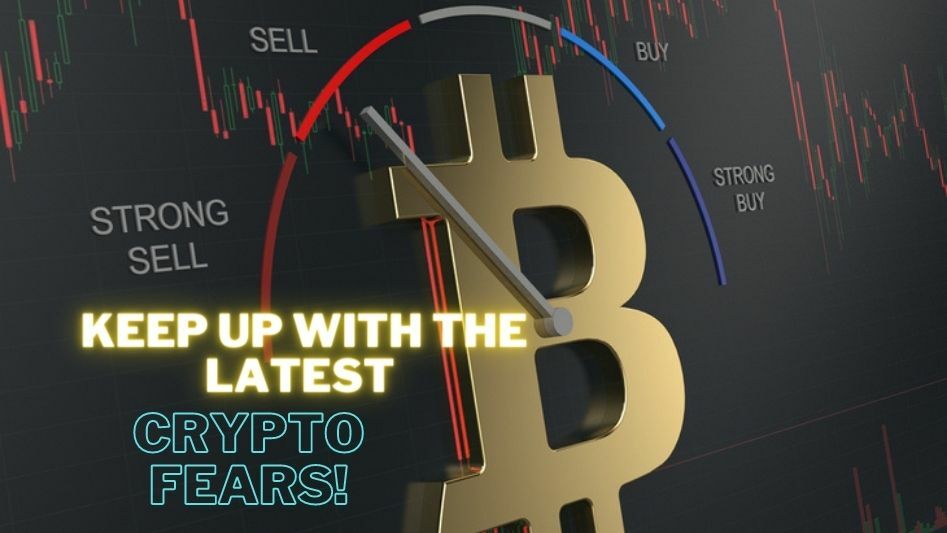
The Fear & Greed Index is shown as a spectrum, with one end for extreme fear and the other for extreme greed.
The CNN Fear & Greed Index used a number of indicators to determine the prevalence of fear and greed in the stock markets as well as the degree to which each emotion was present. On the other hand, not all of these considerations are relevant to cryptocurrency markets, which are exceptional in a variety of ways. Because of this, it has become necessary to create a Fear and Greed Index that is unique to cryptocurrencies.
How Is the Traditional Fear & Greed Index Calculated?
When CNN Money built the first version of its index, the following stock market-related factors were taken into account:
As you can see, most of these things do not immediately apply to the cryptocurrency markets.
How Is a Crypto Fear & Greed Index Calculated?
After that, a number of other cryptocurrency indexes were produced, such as the one that was created by Alternative.me. This index makes use of the following weighted data sources:
How Do You Read a Crypto Fear and Greed Index?

The Fear and Greed Index provides a scale that encompasses the whole gamut of human emotions. Between the extremes of fear and greed, there is a range of possible values, with fear being the highest possible value and greed being the lowest.
The Index is regularly updated based on how it was calculated and where the data came from so that it can show both the most recent and past numbers.
In the Index, each numerical number is accompanied by a description of how it should be interpreted. For instance, it is possible to display "27 – Fear" or "85 – Extreme Greed."
Using the Fear and Greed Index
The Fear and Greed Index ought to be seen by cryptocurrency traders as one of several indicators that they use in their decision-making process rather than as a single decisive factor. It's important to know that relying on a single signal won't give you enough information to make an informed decision.
By reading both the index's current value and its recent historical values, one may determine not only the present mood of the market but also the direction in which it is heading. This can be done with the use of an index.
Detecting Fear
For instance, if the index shows a growing fear sentiment during recent weeks (e.g., with changes from "48-Dread" in the previous month to "30-High Fear" the preceding week to "23-Extreme Fear" to date), this implies that, according to the index, the overall attitude is scared and that the trend thus far has been towards increased fear.
This means that more market players are selling their assets, that the market is moving in a bad direction, and that there is a chance that some assets are trading at a price that is lower than what they are thought to be worth.
Detecting Greed
If, on the other hand, the index reveals extreme greed and has been trending toward a more greedy state over the past few weeks, this indicates that greed is the dominant emotion, markets are currently moving in an upwards or bullish direction, and certain assets may be trading at a price that is higher than their supposed value.
It is essential to have a solid understanding of the fact that these indicators only represent the feelings of certain market players and are not accurate predictors of how the market will perform in the future. A "herd mentality" in which one blindly follows the emotions of the market without paying attention to other vital signs is another mistake that must be avoided at all costs. If market players fail to see the warning indications of an impending shift in market circumstances, they might find themselves in a precarious financial position. Excessive fear or extreme greed are two emotions that can serve this purpose.
The Crypto Fear and Greed Indexes provide a check of the market's pulse that may be used, together with other indicators, to better understand the market's current state.