
⚡Is $1 Million Bitcoin on the Horizon❓

☕️ GM Dear Plebs!
Here is Crox Road, your daily dose of orange pill that will turn you into a Bitcoin Maxi.
The menu for today:
Arthur Hayes, co-founder of BitMEX and Chief Investment Officer of Maelstrom, has made waves in the cryptocurrency community with a bold prediction about the price of Bitcoin (BTC). Hayes, a well-known figure in the crypto industry, shared his views on X (formerly Twitter) through a mysterious message, creating a buzz among Bitcoin enthusiasts. He emphasised that now is a crucial time to take a long position in crypto, dismissing concerns about traditional fiat currencies and urging trust in a higher power for freedom. In a cryptic manner, Hayes hinted that BTC would eventually reach $1 million, concluding his message with an enthusiastic "Yachtzee!!"
Adding to the intrigue, Hayes accompanied his tweet with a snapshot of a Bloomberg article titled "Wall Street Traders Go All-In on Great Monetary Pivot of 2024." The article suggests a significant alignment between Wall Street traders and the Federal Reserve, indicating a substantial shift in monetary policies expected in the coming year. This alignment, according to the article, marks a departure from previous years of discord and anticipates a soft landing in the world's largest economy as the Federal Reserve ends its historic policy tightening campaign.
Notably, the Federal Reserve's revelation that inflation is no longer their top concern signals a potentially more aggressive end to the interest rate-hiking cycle than seen in decades. Hayes' enigmatic tweet about Bitcoin's $1 million target adds another layer of intrigue to this evolving narrative. While the exact meaning behind his message remains elusive, the connection to a potential financial paradigm shift, as hinted at in the Bloomberg article, has ignited speculation about Bitcoin's role in the changing economic landscape.
Market observers and cryptocurrency enthusiasts are closely watching for further insights and developments, eager to understand the implications of Hayes' BTC price prediction in relation to the broader economic shifts suggested by the Bloomberg article. The crypto community remains on edge, anticipating how these developments may shape the global financial landscape.

🔎 SEC Faces Diverse Options
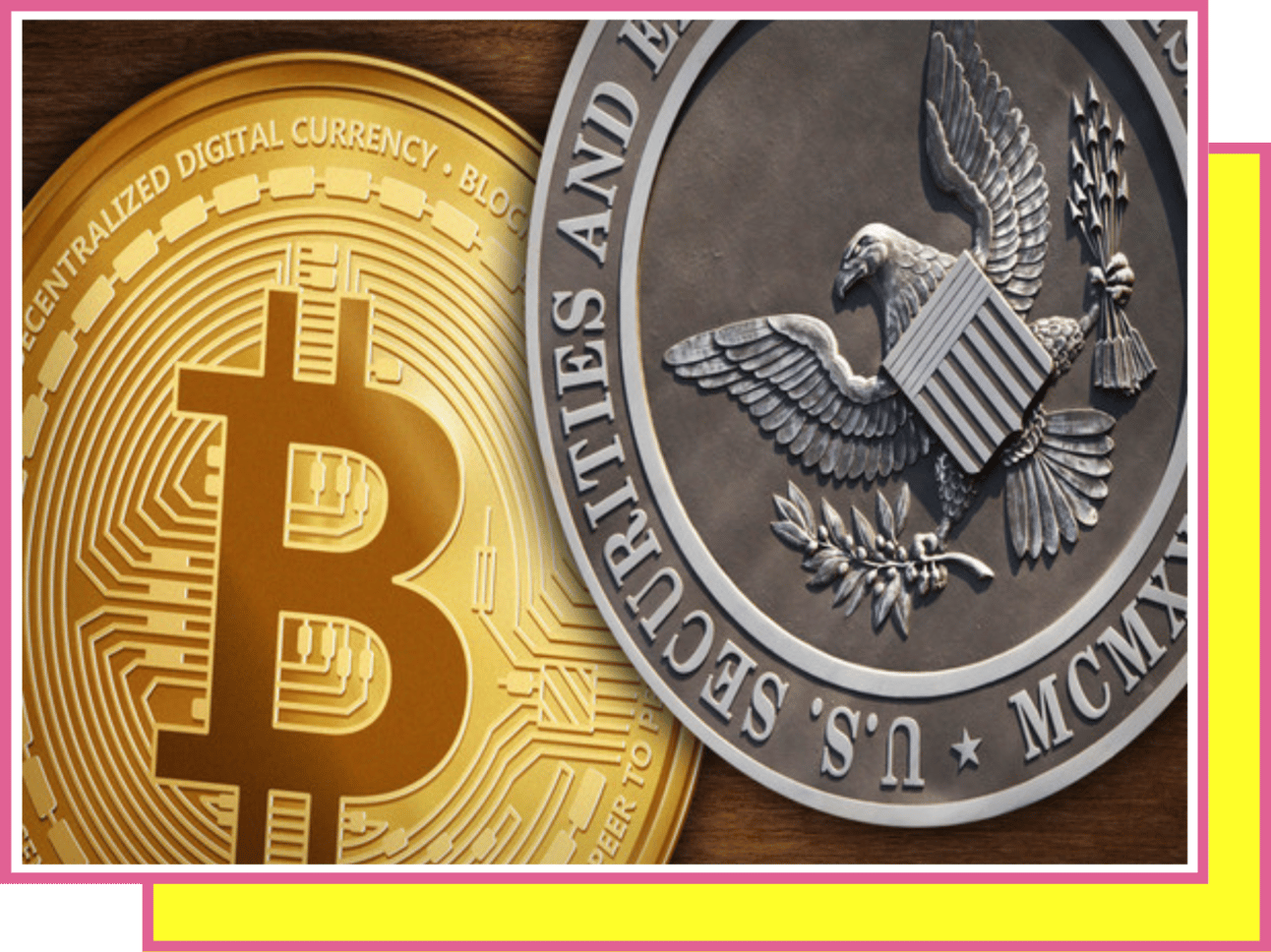
Supporters of spot Bitcoin ETFs are currently engaged in discussions with the Securities and Exchange Commission (SEC) over the choice of redemption models. There seems to be a divide, as institutional players lean towards an 'in-kind' redemption, while the SEC indicates a preference for a 'cash-only' approach.
An interesting development occurred on November 28 when BlackRock Inc. employees met with SEC officials. BlackRock presented a plan labeled as a 'Revised In-Kind' redemption model during this meeting. This proposal aims to provide more flexibility for investors to redeem their ETF shares and offers tax advantages for both BlackRock's iShares and its custodian, Coinbase.
Despite BlackRock's proposal, the SEC seems to be leaning towards the 'cash-only' model, setting the stage for a potential clash of preferences.
Redemption models, in essence, determine what investors receive when they disinvest from the fund, particularly in direct dealings with the fund manager. This does not apply to exchange trades.
The 'in-kind' model involves investors redeeming Bitcoin (BTC) in exchange for their ETF shares, passing liquidation risk and tax obligations to investors. This approach has raised concerns as investors initially purchased their shares in U.S. Dollars (USD), not Bitcoin. Investors preferring to hold BTC could directly buy it on the spot market without incurring manager fees.
Conversely, the 'cash-only' model would require the fund manager to liquidate the redeemed amount, selling Bitcoin and reimbursing investors in the currency they initially used, which is cash.
Experts in the ETF field, such as Matt Walsh from Castle Islands Ventures, see a slim chance of the SEC approving the in-kind redemption model. On the other hand, Eric Balchunas, a Senior ETF analyst for Bloomberg, explains the SEC's inclination towards the 'cash-only' model.
Interestingly, despite their analysis, both experts personally lean towards favouring a revised in-kind redemption model. Overall, this recent development suggests that approval for a spot Bitcoin ETF could be on the horizon.
💳 What is Proof-of-Work?
In the Bitcoin network, computers utilise a process known as proof-of-work (PoW) to validate transactions and ensure the security of the network. This PoW mechanism serves as the consensus method for the Bitcoin blockchain.
Proof-of-work, the original and most widely used consensus mechanism in blockchain-based cryptocurrencies, involves a competitive process where certain participants, often referred to as miners, become validators after demonstrating their dedication to the network. This dedication is proven by committing substantial computing power to the task of discovering new blocks, a process that typically takes around 10 minutes.
When a miner successfully discovers a new block, they are granted the opportunity to fill it with 1 megabyte's worth of validated transactions. This newly created block is then added to the blockchain, and all copies of the ledger across the network are updated to include the new data. In return for their efforts, the miner is entitled to keep any fees associated with the transactions they include, as well as receiving a portion of newly minted bitcoins. This newly created bitcoin is referred to as a "block reward."
Every Bitcoin user is required to pay a network fee each time they initiate a transaction, typically based on its size. This fee acts like purchasing a stamp to send a letter. The objective of adding a transaction fee is to match or exceed the average fee paid by other network participants, ensuring that your transaction is processed in a timely manner.
Miners, who bear the costs of electricity and maintenance for running their machines continuously to validate the Bitcoin network, prioritise transactions with the highest fees. This prioritisation allows them to maximise their earnings when filling new blocks.
To gauge the prevailing fees on the Bitcoin network, users can refer to the Bitcoin mempool, likened to a waiting room where unconfirmed transactions are held until miners select and add them to the blockchain.

🤣 Crox Road Memes



“Bitcoin makes what was once impossible possible and what was once expensive affordable.”

Visit Our Store Here 👉🏻 https://croxroad.store/