⚡From Cold War to Crypto War🪖

☕️ GM Dear Plebs!
Here is Crox Road, your daily dose of orange pill that will turn you into a Bitcoin Maxi.
The menu for today:
💲 Bitcoin's Promise
In the ever-evolving landscape of global finance, a new paradigm is emerging, marked by the convergence of non-aligned countries under the banner of Bitcoin (BTC). This movement harkens back to the ethos of the Non-Aligned Movement, a coalition of nations led by Yugoslavia's Tito, which sought autonomy amid Cold War tensions. Unlike formal alliances, this decentralised group aims to circumvent the dominance of traditional financial institutions, reminiscent of the Cold War's polarisation.
As the world grapples with economic uncertainties, exacerbated by the relentless printing of fiat currencies, Bitcoin emerges as a beacon of financial sovereignty. In the aftermath of the Cold War, Western powers sought new adversaries, with China's ascent eventually reigniting geopolitical tensions. Yet, amidst this backdrop, Bitcoin offers a third way, challenging the supremacy of fiat currencies and the coercive controls wielded by traditional banking systems.
Bitcoin, with its decentralised architecture and ethos of individual empowerment, embodies the spirit of the Non-Aligned Movement in the digital age. Led by figures like El Salvador's President Nayib Bukele and the elusive Satoshi Nakamoto, this monetary non-alignment movement champions self-sovereignty and decentralisation. As nations like El Salvador embrace Bitcoin as legal tender, the movement gains momentum, offering an alternative path away from the entrenched power dynamics of traditional finance. In this era of shifting paradigms, Bitcoin emerges not just as a currency, but as the vanguard of a new "Third World," where individual autonomy and financial freedom reign supreme.
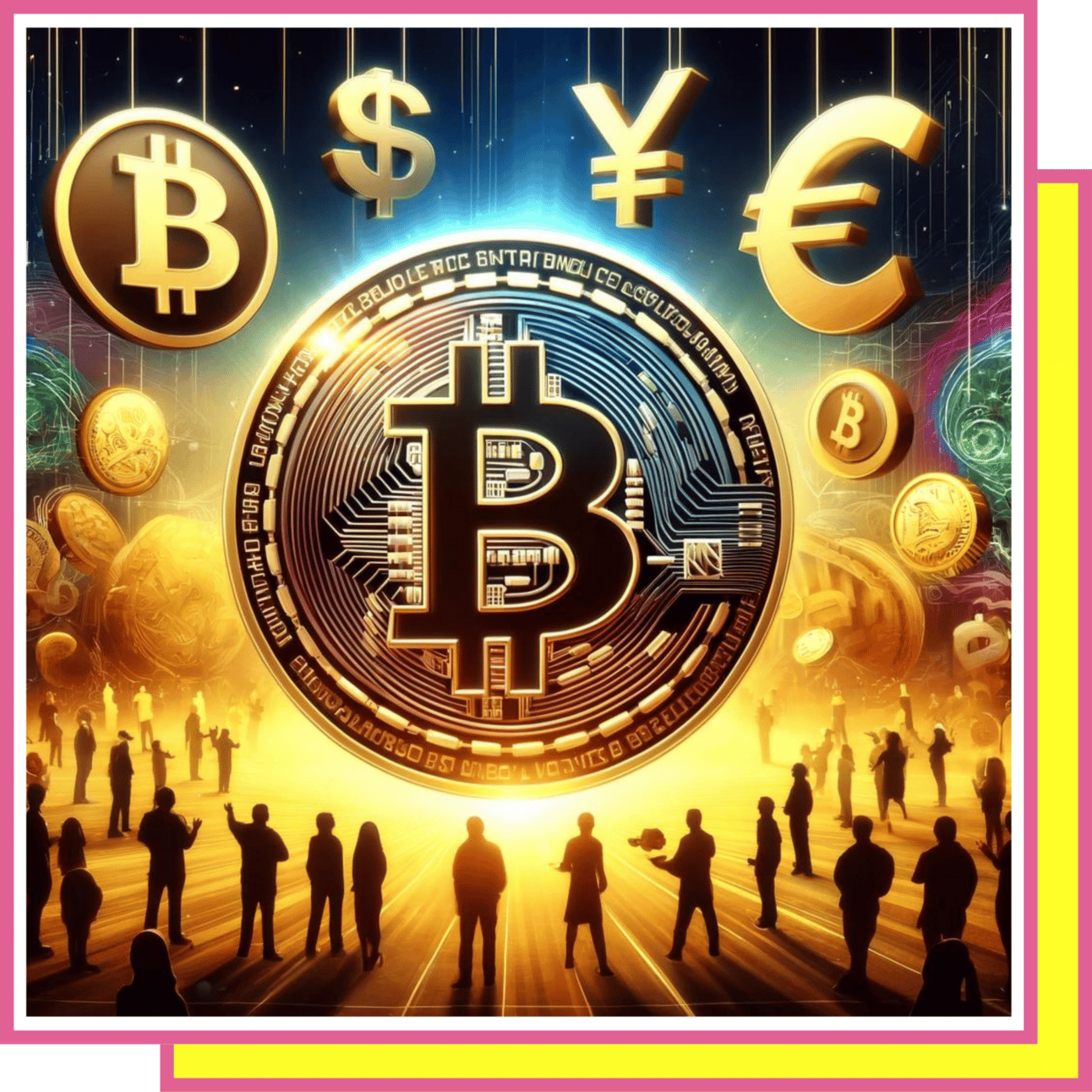
🏦 ICBC's Seal of Approval
The Industrial and Commercial Bank of China (ICBC), the world's largest lender, has released a comprehensive analysis shedding light on the rapid evolution and expanding diversity within the realm of digital currencies. In its report, ICBC draws intriguing parallels, likening Bitcoin to gold and positioning Ethereum as "digital oil" with its capacity to fuel a wide array of applications across the burgeoning web3 ecosystem. This comparison underscores the transformative potential of these digital assets in reshaping traditional financial paradigms.
The report underscores the role of imaginative belief, as historian Yuval Noah Harari aptly notes, in propelling the exponential growth of digital currencies and their varied applications. ICBC's analysis delves into the divergent trajectories of different digital currencies, each catering to distinct needs within the financial landscape. Matthew Sigel, head of digital assets research at VanEck, captures the sentiment within Chinese state-owned enterprise banks, describing their fondness for Bitcoin and Ethereum as akin to "love letters."
Bitcoin's enduring scarcity, reminiscent of gold, is highlighted as a testament to its robust mathematical consensus mechanism, resolving critical issues such as divisibility and authenticity verification. Ethereum, on the other hand, emerges as a powerhouse for the digital future, boasting technical prowess through its innovative programming language, Solidity, and its virtual machine, EVM. This technical sophistication positions Ethereum as a cornerstone for decentralised finance (DeFi) and non-fungible tokens (NFTs), while also paving the way for decentralised physical infrastructure networks (DePin).
Despite Ethereum's promise, the report acknowledges practical hurdles such as security vulnerabilities and scalability challenges. However, ongoing efforts within the Ethereum community, including the transition to Proof of Stake (POS) consensus mechanism and the exploration of Layer 2 solutions, demonstrate a commitment to addressing these obstacles. Moreover, the report underscores the pivotal role of stablecoins in bridging the gap between the crypto market and traditional finance, alongside the transformative potential of central bank digital currencies (CBDCs) in enhancing payment efficiency and financial inclusion on a global scale. As digital currencies continue to evolve, a delicate balance between sustainability, security, and efficiency remains paramount for developers and policymakers alike.

0️⃣ Zero Confirmation
Zero confirmation refers to a transaction that hasn't been validated and added to the blockchain. Until confirmed, it remains outside the official ledger, susceptible to potential reversals or alterations. It signifies a preliminary stage in the transaction process, awaiting validation by network consensus to become an immutable part of the blockchain.

🤣 Crox Road Memes



“In the clash between traditional finance and Bitcoin, tension simmers, defining the struggle for dominance in the digital age.”

Visit Our Store Here 👉🏻 https://croxroad.store/