
⚡Examining the $40K Line💹

☕️ GM Dear Plebs!
Here is Crox Road, your daily dose of orange pill that will turn you into a Bitcoin Maxi.
The menu for today:
👣 Navigating Bitcoin's Landscape
In summary, despite positive developments like the approval of Bitcoin spot ETFs, Bitcoin faced a 17% decline after struggling to surpass the $48K resistance. Currently approaching a crucial support at $39K, there's potential for a renewed bullish movement. The daily chart indicates this support, with the 200-day moving average serving as strong support. A break below could trigger sell-stop orders, resulting in a long-squeeze event.
Examining the 4-hour chart, the rejection from $48K continued, but a retracement towards the flag’s lower boundary might signal a pullback completion, possibly paving the way for Bitcoin’s short-term downward movement to the $39K support range. Mid-term prospects suggest consolidation within the $48K resistance and $39K support zone.
Despite concerns about the uptrend's sustainability, analysing futures market sentiment through Bitcoin funding rates reveals a cooling off from overheated conditions. Positive rates suggest lingering bullish sentiment, raising the possibility of the price resuming its upward trajectory after the current correction stage.

🏁 Bitcoin ETFs Gain Momentum
The "Newborn Nine" Bitcoin ETFs have collectively gathered an impressive 95,000 BTC, and their combined assets under management (AUM) are nearing the $4 billion mark, as per available data. This influx of capital underscores the surging interest among investors in digital assets and the growing acceptance of cryptocurrencies in mainstream finance, according to Bloomberg ETF analyst Eric Balchunas.
Remarkably, while most ETFs experience a decline in trading volume after launch, the Newborn Nine have consistently posted record-breaking volumes. On the fifth day of trading, their volume spiked by 34%, defying the usual trend.
Among these ETFs, BlackRock's IBIT and Fidelity's FBTC lead in growth, attracting over $1.2 billion each within a short period, with each holding slightly over 30,000 Bitcoin. While Fidelity's FBTC has higher inflows, BlackRock's IBIT leads in AUM, holding $1.4 billion compared to Fidelity's nearly $1.3 billion.
Other notable performers include Invesco's ETF and VanEck's ETF, which broke the $100 million mark in AUM on day six of trading. Valkyrie Investments and Franklin Templeton's AUM stood at $71.7 million and $48.6 million, respectively, on Jan. 19. WisdomTree has yet to surpass the $10 million mark.
Interestingly, this significant capital influx into the new Bitcoin ETFs has surpassed the outflows from the Grayscale Bitcoin Trust (GBTC), which experienced a $2.8 billion reduction in AUM during the same period. GBTC saw a decrease in its spot Bitcoin shares, indicating a shift in investor preference towards the new ETFs, offering regulatory clarity and ease of access despite the recent volatility in the Bitcoin market.

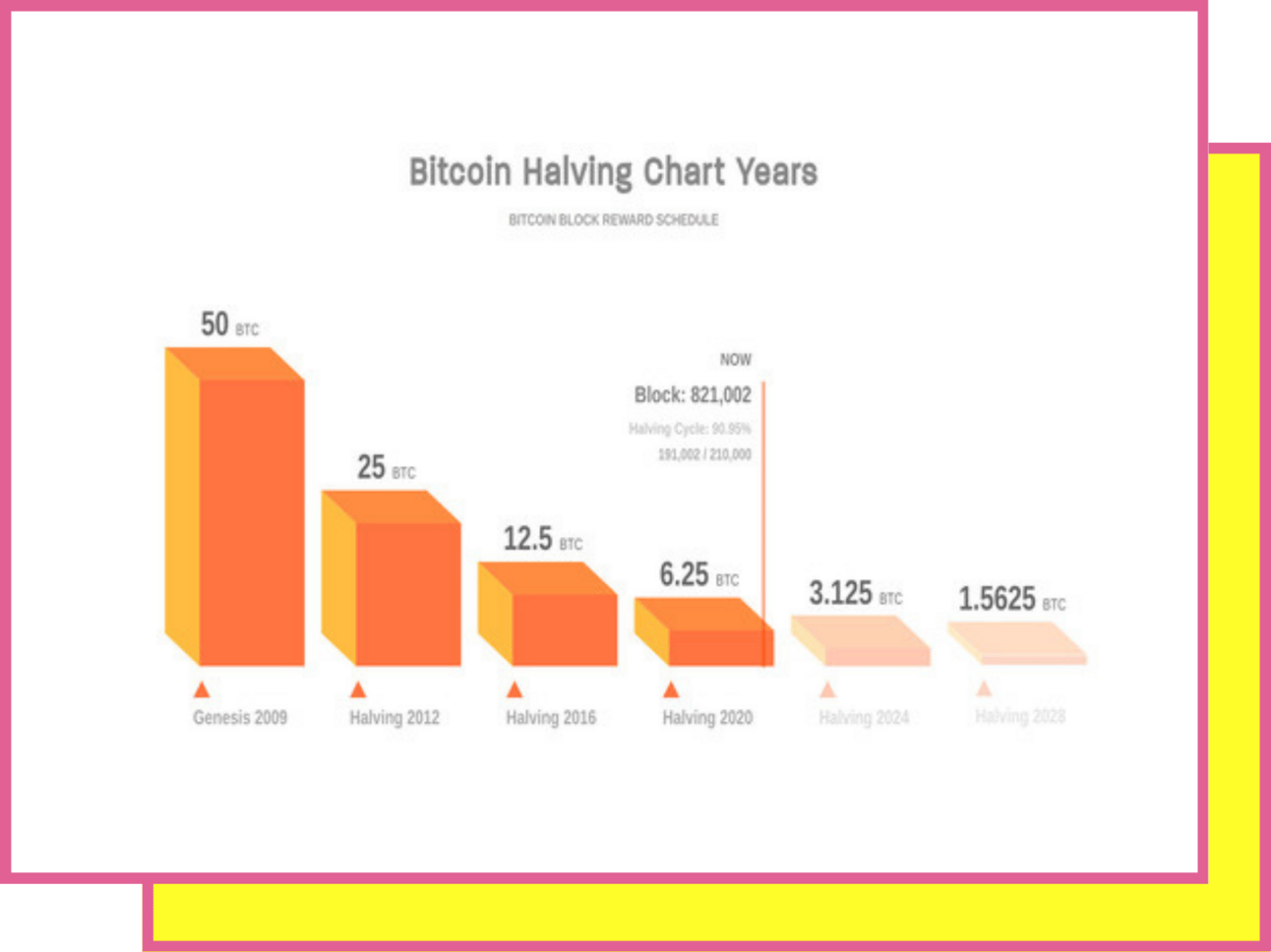
🧯 Why Are the Halvings Occurring Less Than Every 4 Years?
The Bitcoin mining algorithm aims to discover new blocks approximately every 10 minutes. However, the actual time can vary – some blocks take more than 10 minutes, while others take less. This variability can influence the duration to reach the next halving event. For instance, if blocks consistently average 9.66 minutes to mine, it would take around 1,409 days to mine the necessary 210,000 blocks. To put it in perspective, a standard four-year period is 1461 days, accounting for a leap year.
🤣 Crox Road Memes



“I describe Bitcoin as 'the Skype of money.”

Visit Our Store Here 👉🏻 https://croxroad.store/