
ECB President Says ‘No’ to Bitcoin in Central Bank Reserves

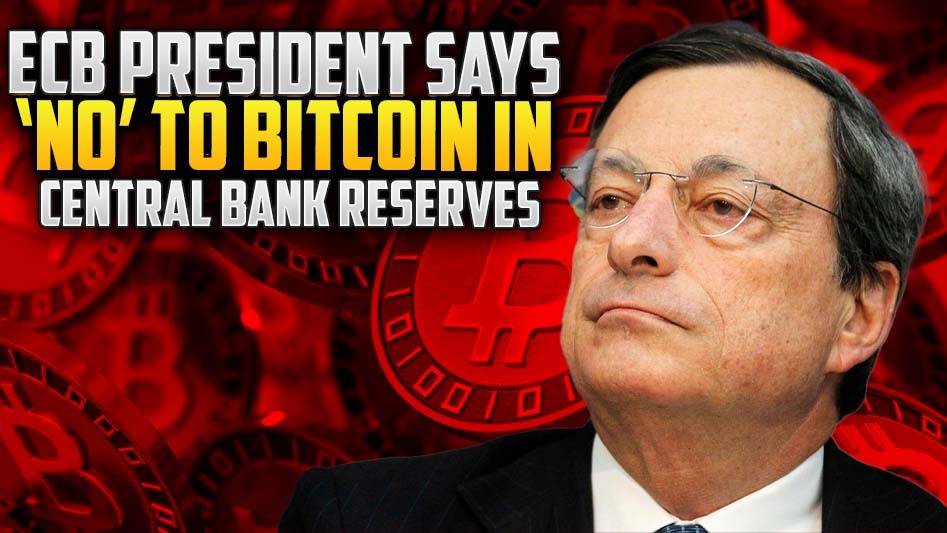
Christine Lagarde, President of the European Central Bank (ECB), has firmly rejected the idea of including Bitcoin in European central bank reserves. Her statement follows growing discussions in financial circles, particularly after Aleš Michl, Governor of the Czech National Bank, suggested that Czechia might consider allocating up to 5% of its reserves to Bitcoin. However, Lagarde emphasized concerns over volatility, liquidity, and potential links to illicit activities, making it clear that Bitcoin has no place in the reserves of the ECB-affiliated central banks.
This declaration highlights the ongoing divide between traditional financial institutions and the emerging cryptocurrency market. While Bitcoin advocates argue that the digital asset could serve as a hedge against inflation and a decentralized store of value, central banks remain wary of its risks. Lagarde’s comments also reflect the broader skepticism within the ECB and other European financial authorities regarding digital assets. The rejection of Bitcoin aligns with the ECB’s cautious approach to digital currencies, as it continues to develop its own central bank digital currency (CBDC), the digital euro. This move underscores a preference for regulated and state-backed digital assets over decentralized cryptocurrencies.
Table of Contents

Lagarde’s Justification: Volatility and Security Concerns
Speaking at a press conference, Lagarde outlined why Bitcoin is unsuitable for central bank reserves. She highlighted three major concerns:
Additionally, Lagarde’s stance reflects the ECB’s broader concerns about the regulatory landscape of cryptocurrencies. As governments around the world work on implementing stricter regulations on digital assets, central banks are hesitant to incorporate an asset that remains largely outside traditional financial oversight. The ECB, along with other global financial institutions, has advocated for stronger anti-money laundering (AML) and counter-terrorism financing (CTF) measures, which Bitcoin’s current structure does not fully align with.
Czech Republic’s Interest in Bitcoin Reserves
Aleš Michl, the Governor of the Czech National Bank, recently stated that his country’s central bank is open to exploring Bitcoin reserves, with a potential allocation of up to 5%. Michl, who has a background in investment banking, sees Bitcoin as a potentially profitable asset despite its volatility.
Michl’s statement marks a rare instance of a central banker openly considering Bitcoin as part of national reserves. Unlike many of his counterparts, who remain skeptical of digital assets, Michl appears willing to take a more innovative approach. He compared himself to a "pioneer" in exploring alternative assets for the country's reserves. This perspective aligns with a growing trend among some financial institutions that see Bitcoin as a hedge against traditional financial risks, such as inflation and currency devaluation.
Despite his openness to the idea, the Czech central bank has not yet made any firm commitments. It announced that it will analyze various asset classes before making any decisions and will continue to disclose all investments on a quarterly and annual basis. This cautious approach suggests that while Bitcoin is being considered, it still faces significant scrutiny. Other central banks and financial institutions will likely observe Czechia’s decision closely, as it could set a precedent for how other smaller economies approach Bitcoin as a reserve asset.
The Czech National Bank’s interest in Bitcoin reflects a broader conversation about the role of digital assets in modern financial systems. While major economies remain cautious, smaller nations with more flexible financial policies may be more willing to experiment with Bitcoin. If Czechia ultimately decides to include Bitcoin in its reserves, it could encourage other central banks to reevaluate their stance on digital assets.

The U.S. and Bitcoin in State Reserves
While the ECB rejects Bitcoin as a reserve asset, discussions in the United States paint a different picture. The Trump administration has signaled interest in creating a “national digital asset stockpile,” though this would likely be built from seized assets rather than direct Bitcoin purchases. Additionally, several U.S. states, including Utah and Texas, are exploring the inclusion of Bitcoin in state treasury reserves.
The U.S.’s approach to Bitcoin in state and federal reserves demonstrates the country's more decentralized financial decision-making process. Unlike the European Union, where monetary policy is largely controlled by the ECB, individual states in the U.S. have more autonomy in managing their finances. This allows for a more experimental approach to Bitcoin adoption at the state level, potentially paving the way for broader acceptance in government reserves.
What This Means for Bitcoin’s Future in Central Banks
Lagarde’s stance suggests that Bitcoin is unlikely to gain acceptance among major central banks in the near future. However, the discussions in Czechia, the U.S., and other jurisdictions indicate that Bitcoin’s role in government reserves is an evolving topic.
Key points to consider:

Conclusion
Christine Lagarde’s rejection of Bitcoin as a reserve asset underscores central banks’ cautious approach to cryptocurrencies. While some institutions and governments are exploring Bitcoin’s potential, major financial authorities like the ECB remain skeptical. Whether Bitcoin will eventually find a place in national reserves remains uncertain, but ongoing discussions highlight its increasing influence in global finance.
As digital assets continue to evolve, central banks will need to balance innovation with financial stability. While Bitcoin may not be included in ECB reserves anytime soon, its growing role in state and national financial strategies suggests that its influence in global economies is far from over.
FAQs
Why did Christine Lagarde reject Bitcoin as a central bank reserve asset?
Christine Lagarde, President of the ECB, cited Bitcoin’s extreme volatility, lack of liquidity, and potential ties to money laundering as key reasons for rejecting it as a reserve asset. She emphasized that central bank reserves must be stable, secure, and free from financial crime risks.
Did the Czech National Bank decide to add Bitcoin to its reserves?
No, the Czech National Bank has not made a final decision. Governor Aleš Michl suggested that Bitcoin could be considered for up to 5% of its reserves, but the bank has stated it will analyze different asset classes before making any commitments.
Are any countries currently holding Bitcoin in their central bank reserves?
Currently, no major central banks officially hold Bitcoin as a reserve asset. However, some countries, such as El Salvador, have adopted Bitcoin as legal tender and hold it in their national treasury. Additionally, some U.S. states, including Texas and Utah, are exploring Bitcoin as part of state reserves.
How does Bitcoin compare to traditional reserve assets like gold?
Unlike gold, which has been a stable store of value for centuries, Bitcoin is highly volatile and relatively new. While gold is widely accepted as a safe-haven asset, Bitcoin’s price fluctuations and evolving regulatory landscape make it a riskier option for central banks.
Could central banks change their stance on Bitcoin in the future?
It’s possible. As Bitcoin matures and regulatory frameworks develop, central banks may reassess their stance. If Bitcoin gains more stability and better liquidity, it could become a more viable reserve asset in the future.
VISIT OUR STORE

The Best Merch For Bitcoin Maxis
Visit Crox Road Store 👉🏻 https://croxroad.store/