⚡Crypto Fraud Alert⚠️

☕️ GM Dear Plebs!
Here is Crox Road, your daily dose of orange pill that will turn you into a Bitcoin Maxi.
The menu for today:
Reports have emerged of a cryptocurrency trader suffering substantial losses amounting to tens of millions of dollars in what is known as an "address poisoning" scam. This type of scam involves perpetrators creating spoof accounts of the victim's crypto address and sending a small amount of currency to the victim. The hope is that the victim will inadvertently send funds to the fake address later. As blockchain transactions are publicly accessible, scammers can easily locate individuals' crypto addresses and conduct spoof transactions to lure victims.
CertiK, a blockchain security firm, confirmed the detection of a transfer of $69.3 million worth of Bitcoin to an address associated with address poisoning. The victim's cryptocurrency wallet on Coinbase now reflects a staggering loss of approximately 97% of its assets, leaving it with a value just over $1.6 million. Peckshield, another security firm, revealed that the scammers converted the stolen Bitcoin into 23,000 Ethereum and subsequently transferred the funds. Ethereum is currently trading at $3,116 per coin.
To mitigate the risk of falling victim to such scams, Trezor, a crypto trading platform, advises users to meticulously double-check every address before executing a transaction. It also recommends against copying addresses from transaction history to prevent falling prey to address scams. Employing a small test transaction before conducting a larger transfer serves as an effective method for verifying the accuracy of the address.
Cryptocurrency-related scams have been on the rise, as highlighted by the FBI's 2023 internet crime report, which revealed that such frauds cost investors a staggering $3.94 billion in losses last year. These scams take various forms, including "pig butchering" schemes, which involve criminals building trust with victims through small payments before ultimately absconding with large sums of money. The FTC advises individuals to remain vigilant and avoid trusting anyone who insists on crypto payments or promises unrealistically high returns on investments, as these are common red flags indicative of potential scams.

♻️ Grayscale's Bitcoin ETF Reversal
In the ever-evolving landscape of cryptocurrency, shifts in market dynamics can occur swiftly and unpredictably. Grayscale's recent resurgence in the Bitcoin ETF market serves as a poignant example of this phenomenon. Following a challenging period marked by nearly four months of continuous capital outflows from its flagship GBTC fund, the New York-based firm has staged a remarkable comeback.
To appreciate the magnitude of Grayscale's revival, one must first acknowledge the hurdles the asset manager encountered in recent months. As a pioneering figure in the space with its Bitcoin ETF GBTC, Grayscale had long been a preferred choice for institutions seeking exposure to the leading cryptocurrency. However, over the course of four arduous months, Grayscale witnessed a mass exodus of investors, who opted for newer and more contemporary investment instruments. This substantial capital flight, totaling over $17 billion, posed a significant threat to the firm's prominent position.
Amidst the current enthusiasm surrounding Bitcoin ETFs, Grayscale has managed to defy the odds and attract its first fresh inflows in the form of a staggering $63 million into its flagship GBTC fund. This substantial influx of capital may signify the dawn of a new era for the company, marking a notable turnaround in its fortunes. Furthermore, this resurgence underscores the resilience of the crypto industry and its capacity to adapt to evolving market trends. Far from signalling the demise of established players, the emergence of Bitcoin ETFs appears to have reignited interest in the asset class, with Grayscale poised to capitalise on this newfound momentum. As the crypto ecosystem continues to evolve and attract new participants, veterans like Grayscale demonstrate their enduring relevance and ability to thrive amidst changing market dynamics.

📇 Graphics Card
Graphics cards, commonly known as GPUs (Graphics Processing Units), play a pivotal role in verifying transactions on a blockchain through the proof of work consensus mechanism. This process involves solving complex cryptographic puzzles, which demand considerable computational resources. High-end graphics cards, initially designed for PC gaming, possess the processing power required to efficiently tackle these cryptographic puzzles. Due to their parallel processing capabilities, GPUs are well-suited for the intensive computational tasks involved in validating transactions on the blockchain. As a result, they have become indispensable components in the mining operations that sustain many cryptocurrency networks.

🤣 Crox Road Memes

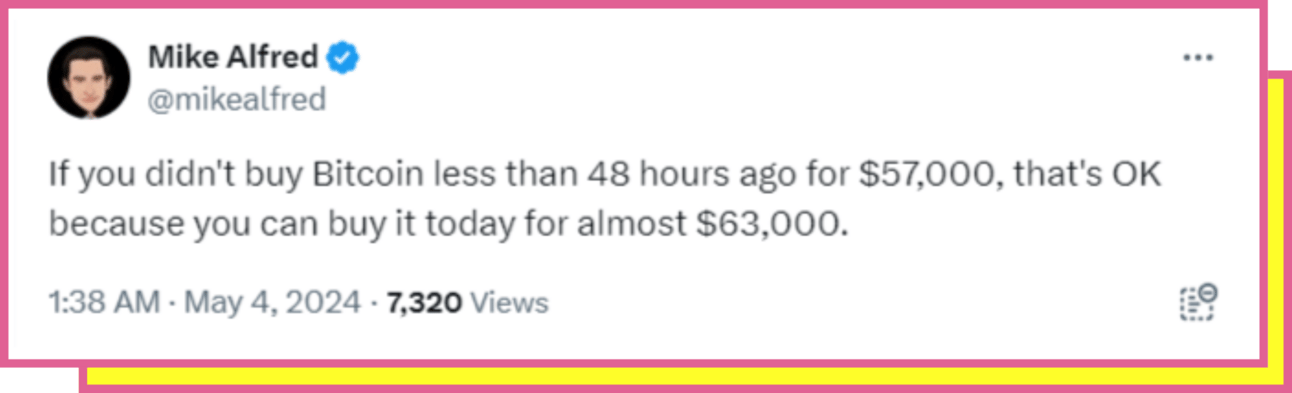

“In Bitcoin's embrace, every transaction feels like a journey back to the roots of financial freedom.”

Visit Our Store Here 👉🏻 https://croxroad.store/