⚡Blockchain-Powered ID Service🆔

☕️ GM Dear Plebs!
Here is Crox Road, your daily dose of orange pill that will turn you into a Bitcoin Maxi.
The menu for today:
⚠️ Buenos Aires' QuarkID Initiative
The move by the local government of Buenos Aires to launch a digital ID service, QuarkID, using blockchain technology for storing important documents like marriage and death certificates certainly sounds innovative on the surface. It's a step toward the digitization of essential records, which can potentially streamline processes and make life easier for residents. However, it also raises some critical concerns.
The idea of decentralizing digital identity and returning control over data to individuals is a noble concept. It promises greater security and control over personal information, which is a growing concern in the age of digital data breaches. It also aims to facilitate more efficient interactions between government, businesses, and citizens, which can be seen as a positive move.
However, the flip side of this initiative is the potential threat it poses to public privacy and individual freedom. The centralized storage of personal identification documents on a blockchain can be a double-edged sword. While it may enhance security, it also provides authorities with unprecedented access to citizens' personal information. This access could potentially be exploited for surveillance or control purposes, infringing on people's right to privacy.
Moreover, the expansion of this digital ID system to include proof of income, academic attendance, and benefit claim documents raises questions about the extent to which citizens' data will be tracked and monitored. It's essential to strike a balance between security and individual liberty, and this initiative seems to tilt toward the former.
The intention to create a more agile and secure digital interaction between the government, companies, and individuals is commendable, but it must be implemented with strict safeguards to prevent abuse. Citizens should have transparency about how their data is used, who has access to it, and what protections are in place to ensure their privacy remains intact. Without these assurances, initiatives like QuarkID can indeed be perceived as threats to public privacy and a means of exerting control over free will. It's essential that governments carefully consider the ethical and privacy implications of such initiatives and engage in open dialogues with their citizens to address their concerns.
It's interesting to see how blockchain technology is being used in Buenos Aires for a digital ID service, QuarkID. On the one hand, it seems like a move toward the future, making things more digital and convenient. But if you ask me, it does raise some eyebrows.
They're talking about "verified credentials" and storing important documents on your own device, which sounds kind of cool, right? But here's the thing: instead of using blockchain for something groundbreaking like a digital currency, they're focusing on IDs. It makes you wonder if that's the best use of this technology. Blockchain has the potential to revolutionize how we handle money and transactions, but they're using it for IDs.
Sure, it's nice that they say these digital documents won't replace the original paper ones at first. But they also mention that eventually, everything will go digital. And that's where it starts to feel a bit intrusive. Your personal documents are on your device, and who knows who might want access to them? It could be convenient, but it's also a bit unnerving.
So, while the idea might seem forward-thinking, I can't help but think that there are more exciting and practical uses for blockchain technology than just digital IDs. It's a bit like using a sports car to run errands when you could be racing it on the track.

🔚 ETF Verdict Delayed
On September 28, the SEC made separate announcements for four different companies: BlackRock, Bitwise, Invesco Galaxy Digital, and Valkyrie. This is the second time in just a month that the SEC has extended the deadline for deciding on these ETFs from BlackRock, Invesco, Galaxy Digital, and Valkyrie.
This delay basically means they need more time to review these ETF proposals and make up their minds about whether they're good to go or not. It's not uncommon for regulatory agencies like the SEC to take their time with decisions like these, especially when it comes to something as relatively new and complex as cryptocurrencies like Bitcoin. So, investors and the crypto community will have to keep waiting for the verdict on these ETFs.
The SEC is going through a formal process, following some rules from a law called the Securities Exchange Act of 1934. They're currently collecting comments from the public about these Bitcoin ETF proposals, and they haven't made up their minds yet.
Originally, they were supposed to decide on these ETFs between October 16 and 19.There's a government shutdown looming this weekend. This happens when the government runs out of money, and they temporarily close down many federal agencies, including the SEC. That also means they stop releasing economic data during the shutdown.
So, because of this possible government shutdown, the SEC had to speed up their announcement about the Bitcoin ETFs. They didn't want to leave these decisions hanging while the government was shut down. So, they're trying to get things sorted out before that happens.
This year, seven different investment firms have either put in new applications or resubmitted their applications for spot Bitcoin ETFs. And that's not even counting Grayscale, which is trying to change its Bitcoin trust into an ETF.
There's been some legal action too. A U.S. court recently said the SEC was wrong in saying no to Grayscale's application, which means it's more likely they'll get approval soon.
The SEC also decided to delay Ark Invest's ETF application for the second time this week. And if that's not enough, we've got three other ETFs from WisdomTree, Fidelity, and VanEck that have deadlines in the third week of October.
So, it's a bit of a waiting game right now. Bloomberg's expert on ETFs, James Seyffart, thinks all of these applications are probably going to face similar delays, especially with the looming possibility of a government shutdown. It's kind of like a traffic jam for Bitcoin ETFs, and everyone's just waiting for the green light.
🪂 Falling Wedge
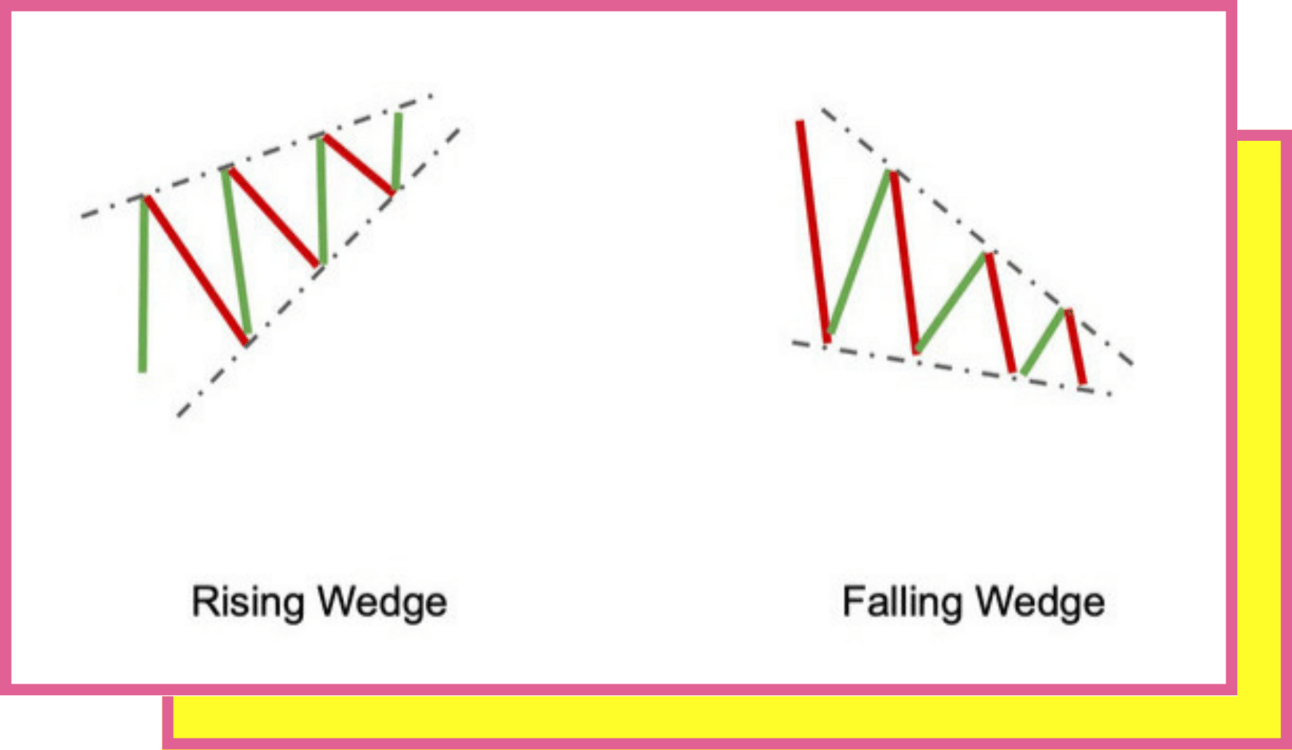
A falling wedge is a bullish reversal pattern, essentially the opposite of a rising wedge. It forms when there are both higher highs and lower lows on a price chart, suggesting a potential shift in the trend from bearish to bullish. This pattern typically provides a buy signal, indicating that an ongoing uptrend is likely to continue. Traders can identify a falling wedge by looking for specific characteristics, such as the asset forming higher highs and lower lows, the presence of horizontal support, and its occurrence in the middle of an uptrend. Another chart pattern mentioned is the rectangle chart pattern, which emerges when an asset's price consolidates between two horizontal levels of support and resistance, often signaling an impending breakout in either direction.
🤣 Crox Road Memes



“Bitcoin is the great antidote to the poison of enthusiasm and superstition.”