Bitcoin and Gold face-off: Who wins the market cap battle?

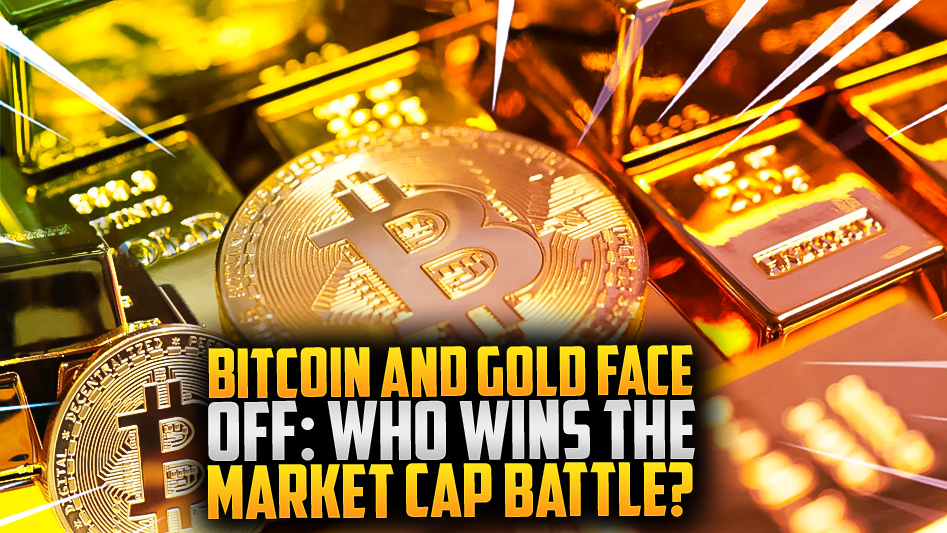
Table Of Content
In the vast arena of investments, two contenders have been drawing significant attention: the millennia-old, tried-and-true gold, and the relatively new, digital disruptor, Bitcoin. Both have their staunch advocates and critics, but when it comes to market capitalization, who truly reigns supreme?

Historical Context: The Connection Between Bitcoin and Gold
The relationship between Bitcoin and gold is deeply entrenched, dating back to the very genesis of the digital currency. Satoshi Nakamoto, Bitcoin's elusive creator, was evidently inspired by gold's enduring value, which is largely attributed to its scarcity. Drawing from this age-old reverence for gold, Nakamoto designed Bitcoin with a definitive cap, ensuring that only 21 million coins would ever be in circulation. This decision was far from arbitrary; it was a strategic move to endow Bitcoin with a scarcity akin to that of gold, aiming to make it a reliable store of value in the digital realm.
In a 2009 Bitcointalk forum post, while unveiling the first version of Bitcoin, Nakamoto explicitly referenced gold's rarity. This wasn't a casual mention but a foundational statement, underscoring the core ethos behind Bitcoin's creation. By drawing parallels between the two, Nakamoto envisioned a digital asset that, like gold, would serve as a hedge against economic uncertainties. While they differ in tangibility—with one being a gleaming metal and the other a string of code—their shared principle of limited supply unites them in a compelling narrative of value and trust.
Market Cap Showdown
Gold, with its rich history as a store of value, boasts a staggering market cap of $12.8 trillion. In contrast, Bitcoin, despite its meteoric rise and adoption, has a market cap of $570 billion. While Bitcoin's valuation surpasses that of industry giants like Visa, Taiwan Semiconductor, and JPMorgan Chase, it still lags 55% behind silver and is dwarfed by gold.
However, the question remains: Is the price of Bitcoin and gold intrinsically linked? The volatility of Bitcoin suggests a complex relationship. Its 30-day correlation indicator with gold can swing from positive to negative within weeks, indicating a lack of consistent price connection. This inconsistency can be attributed to Bitcoin's nascent stage of adoption and the prevailing uncertainties about its potential and practical applications.

Bitcoin Investment Products vs. Gold ETF
When we delve deeper into investment vehicles, the differences become more pronounced. Bitcoin-related investment products, such as the Grayscale Bitcoin Trust and various exchange-traded notes, amounted to $24 billion in July, representing about 4.2% of Bitcoin's market cap. In contrast, gold-backed ETF products were valued at $215 billion in June, a mere 1.7% of gold's market cap.
However, a more holistic view reveals that central banks, the International Monetary Fund, and private investors hold a combined $5.8 trillion in gold, accounting for 45.2% of its market cap. In comparison, Bitcoin's adoption as a store of value among institutional investors is approximately 81% smaller than gold.
Bitcoin's Potential Beyond Market Cap
While the market cap battle seems tilted in favor of gold, Bitcoin's potential isn't solely tied to its comparison with the precious metal. Bitcoin's market cap could soar to $2.9 trillion, even without full institutional adoption as a store of value. This potential surge is attributed to the rising demand for decentralized digital trading, especially as traditional financial systems face challenges.
Furthermore, Bitcoin's increasing integration into e-commerce and online markets could boost its transaction volumes. As people seek alternatives to conventional payment methods, Bitcoin's inherent scarcity and utility might create a self-sustaining value cycle.

Conclusion
The face-off between Bitcoin and gold in terms of market cap might currently favor gold, but the battle is far from over. Bitcoin, with its unique value propositions and increasing adoption, presents a compelling case for future growth. While gold's historical significance and tangible nature give it a robust foundation, Bitcoin's digital and decentralized attributes make it a formidable contender in the ever-evolving financial landscape. Only time will tell who emerges as the ultimate victor in this market cap battle.
FAQs
What is the market cap of Bitcoin and gold?
Bitcoin's market cap is $570 billion, while gold's is $12.8 trillion.
Did Satoshi Nakamoto compare Bitcoin to gold?
Yes, Satoshi emphasized the importance of Bitcoin's limited supply by drawing parallels to gold's rarity.
How do Bitcoin investment products compare to gold ETFs?
Bitcoin-related investment products amounted to $24 billion, while gold-backed ETFs were valued at $215 billion.
Do central banks invest in Bitcoin like they do in gold?
Central banks and the International Monetary Fund hold a significant amount of gold. Bitcoin's institutional adoption is currently smaller in comparison.
Can Bitcoin's market cap surpass that of gold?
While gold currently leads, Bitcoin's potential growth in decentralized digital trading and e-commerce integration could significantly boost its market cap in the future.