
What Morocco Teaches the World About Bitcoin Regulation

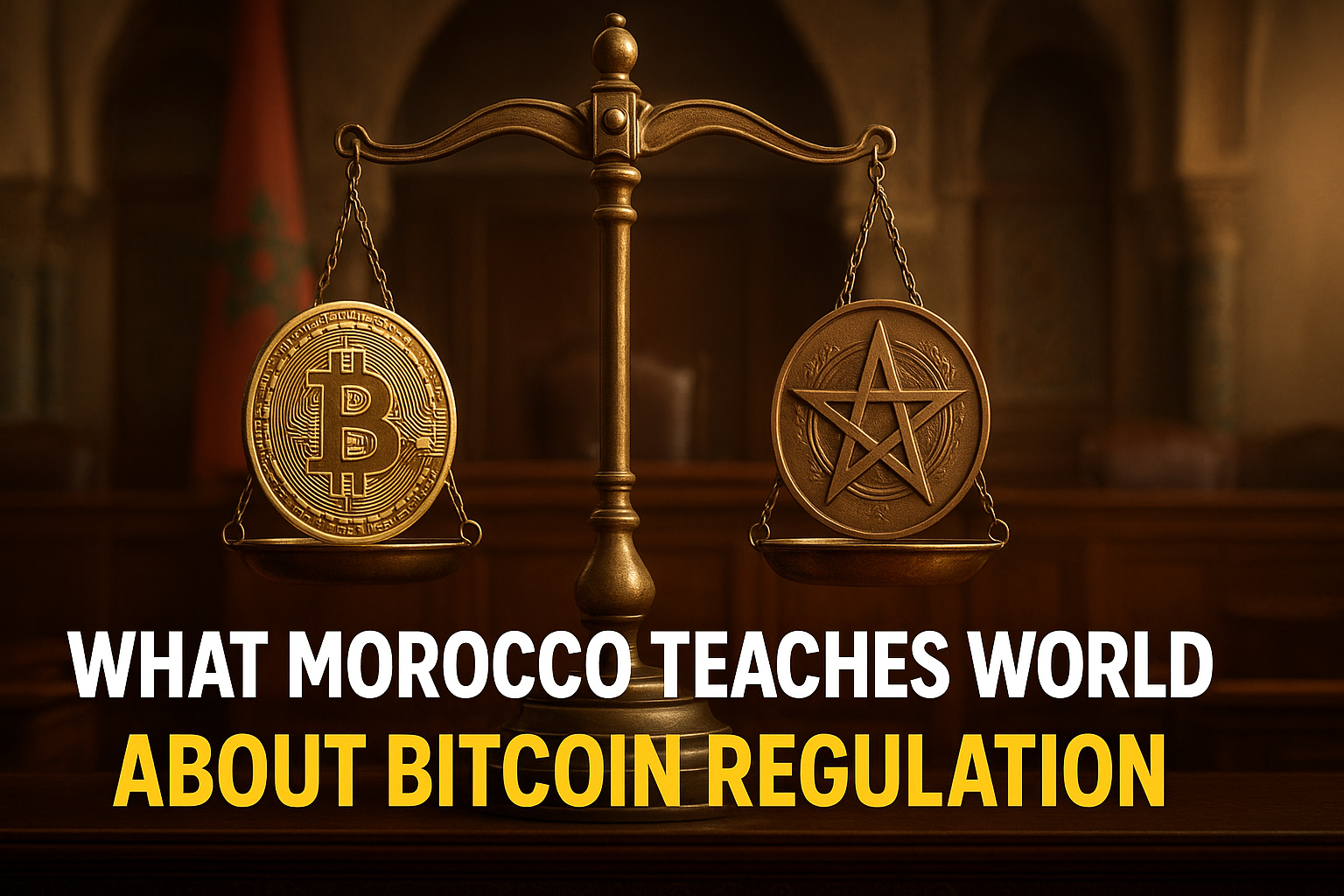
In 2017, Morocco officially banned the use of Bitcoin and other cryptocurrencies, citing concerns about fraud, money laundering, and lack of consumer protection. Yet, nearly a decade later, Bitcoin continues to grow in popularity across the country. This paradox highlights an important global lesson: outright prohibition does not eliminate cryptocurrency usage—it only pushes it underground. Morocco’s evolving stance on Bitcoin offers valuable insights for countries grappling with the question of how to regulate digital assets.
Table of Contents

Morocco’s Bitcoin Ban: The Beginning of a Paradox
The Moroccan government, through Bank Al-Maghrib and the Ministry of Economy and Finance, declared cryptocurrency transactions illegal in 2017. The justification was clear: uncontrolled foreign exchange flows, the risk of criminal activities, and the absence of legal protections for users.
However, instead of halting adoption, the ban fueled a surge in peer-to-peer (P2P) trading platforms, with many Moroccans continuing to buy and sell Bitcoin informally. This unintended consequence demonstrates how rigid bans often backfire, driving innovation and participation into unregulated spaces.
The Rise of Underground Crypto Trading
Despite prohibition, Morocco has consistently ranked among the leading African nations in Bitcoin adoption. Platforms like LocalBitcoins and Paxful once reported strong activity from Moroccan users. Informal trading groups, social networks, and encrypted messaging apps have become key tools for enthusiasts determined to access Bitcoin.
This underground growth highlights the resilience of decentralized technology. Unlike traditional finance, Bitcoin does not require government permission to operate, which makes enforcement of bans extremely difficult.
Draft Law: From Prohibition to Regulation
Recognizing that prohibition alone was unsustainable, Bank Al-Maghrib announced in 2024 that a draft law was in preparation to regulate cryptocurrency. The proposed framework includes:
This shift shows a pragmatic recognition: rather than fighting Bitcoin in the shadows, it is more effective to create legal frameworks that bring users and businesses into the open.
Morocco’s Experiment With a Digital Dirham
Alongside regulating Bitcoin, Morocco is also exploring the launch of a central bank digital currency (CBDC) — a “digital dirham.” While different from decentralized crypto, a CBDC could modernize payment systems, reduce costs, and increase transparency.
However, it also represents the state’s attempt to retain control over money flows, contrasting with Bitcoin’s philosophy of borderless and permissionless finance. This dual path—regulating crypto while building a state-backed digital currency—demonstrates the delicate balance governments are seeking worldwide.

Lessons for the World
1. Bans Don’t Work
Morocco proves that outright bans cannot kill Bitcoin. Instead, they fuel underground economies that are harder to regulate and more dangerous for consumers.
2. Regulation Builds Trust
By moving toward regulation, Morocco acknowledges that a legal framework can help protect investors, encourage innovation, and prevent criminal misuse—without stifling adoption.
3. CBDCs Are Not a Substitute
The development of a digital dirham shows that central banks see the benefits of digital money. But CBDCs will not replace Bitcoin’s unique appeal as a decentralized, global store of value.
4. Global Standards Matter
Morocco’s regulatory draft aligns with global anti-money laundering rules, reflecting how countries cannot regulate crypto in isolation. Harmonization with international norms is key to successful oversight.
The Future of Bitcoin in Morocco
As Morocco transitions from prohibition to regulation, the country stands at a crossroads. Will regulation provide the clarity and trust needed to bring users into the legal system, or will people continue to rely on underground markets?
The world will be watching closely. If Morocco manages to balance control with innovation, it could become a model for other nations navigating the complexities of Bitcoin regulation.

Conclusion
Morocco’s journey with Bitcoin illustrates a crucial lesson: banning crypto does not erase its presence—it only reshapes how people use it. By shifting toward regulation, Morocco demonstrates that the smarter path is not prohibition, but integration with safeguards. For governments worldwide, the Moroccan case offers a clear message: embracing Bitcoin responsibly may prove far more effective than fighting against it.
FAQs
Why did Morocco ban Bitcoin?
Morocco banned Bitcoin in 2017 due to concerns about money laundering, fraud, and uncontrolled capital flows. Authorities wanted to protect consumers and preserve financial stability.
Is Bitcoin still illegal in Morocco?
Yes, officially Bitcoin remains prohibited. However, many Moroccans trade through peer-to-peer platforms and foreign exchanges. A draft law to regulate crypto is currently under discussion.
How do Moroccans use Bitcoin despite the ban?
Most rely on peer-to-peer (P2P) trading, informal networks, and encrypted messaging apps to buy and sell Bitcoin. This underground market has grown significantly since the ban.
What is Morocco’s plan for regulating Bitcoin?
Morocco’s central bank, Bank Al-Maghrib, announced in 2024 that a draft law is being prepared. It aims to define crypto-assets, license service providers, enforce KYC/AML compliance, and introduce investor protections.
What is the digital dirham?
The digital dirham is Morocco’s proposed central bank digital currency (CBDC). Unlike Bitcoin, it will be state-backed and controlled, designed to modernize payments and enhance transparency.