
⚡US Authorities Crack Private Key🔏

☕️ GM Dear Plebs!
Here is Crox Road, your daily dose of orange pill that will turn you into a Bitcoin Maxi.
The menu for today:
🔑 The $15B Private Key Crack
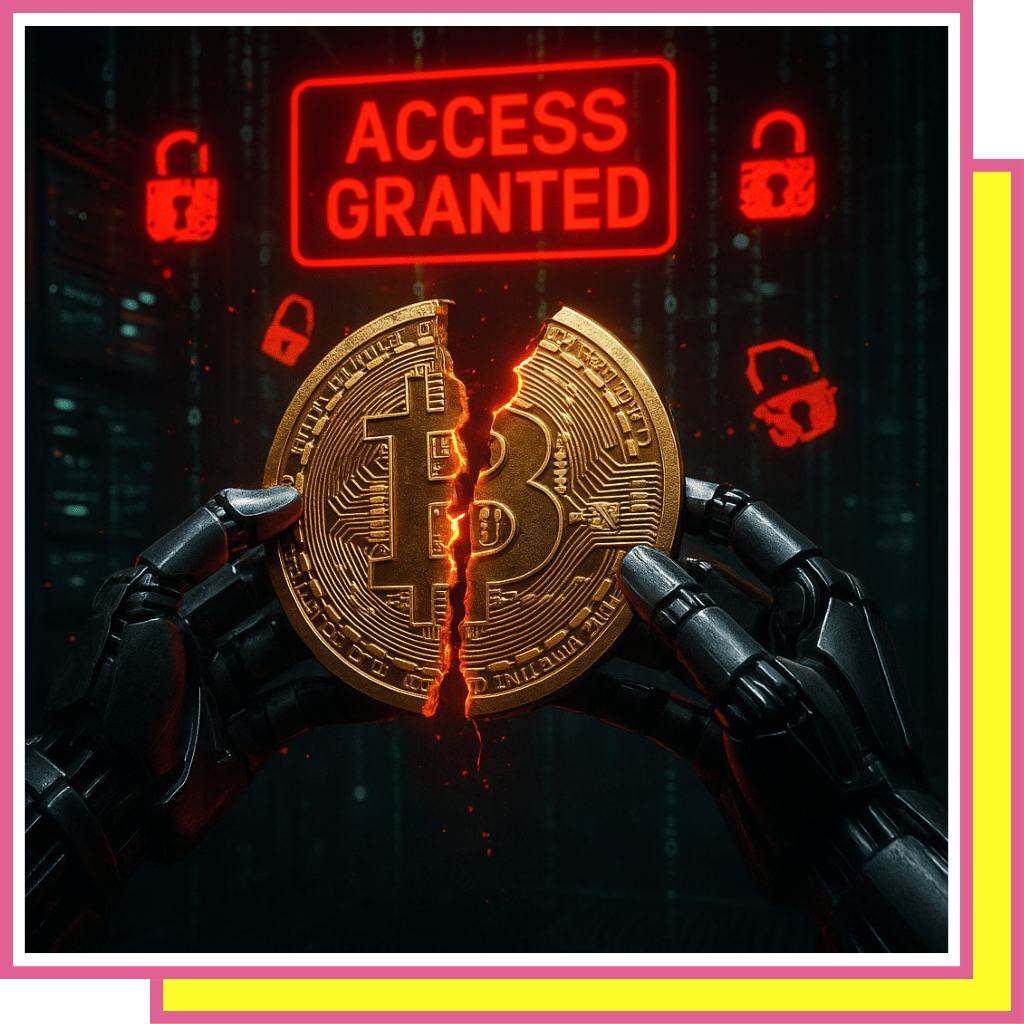
A revelation has shaken the crypto world as it emerged that the United States government accidentally cracked the private key to over fifteen billion dollars worth of Bitcoin. The discovery, tied to the so-called “Milk Sad” vulnerability, revealed how a flaw in elliptic curve digital signatures exposed certain Bitcoin wallets to brute force attacks. What makes this incident astonishing is that it wasn’t achieved through traditional hacking but through a weakness in algorithmic code that opened access to one of the largest stores of digital assets ever uncovered.
Experts have traced the issue to flawed random number generation in certain wallet software, which made it possible to reverse engineer private keys associated with massive Bitcoin balances. It is a haunting reminder that even the most trusted cryptographic systems can collapse under the weight of a small mathematical error. The revelation has sparked global debate about how governments handle seized digital property, and whether such accidental access should be viewed as lawful intervention or pure chance.
For Bitcoin holders, the “Milk Sad” case is more than a technical flaw, it is a warning about misplaced confidence in digital perfection. It shows how fragile trust can be in systems built on code when that code falters. As regulators frame this as a victory for security, others see it as a cautionary tale that questions the very foundations of privacy, ownership, and control in the world of cryptocurrency.
🫠 Bitcoin Treasury Meltdown
The collapse in the net asset value of Bitcoin treasuries has sent ripples across the fintech landscape, exposing the fragility of valuation models built during the bull run. As institutional Bitcoin holdings dipped below their NAV, traditional metrics of corporate strength began to crumble, leaving space for leaner and more adaptive fintech startups to step in. What once signaled a crisis now looks like opportunity, as young firms explore innovative ways to stabilize treasury management through on-chain analytics and Bitcoin-backed liquidity solutions.
Fintech entrepreneurs see this turbulence as a natural reset, one that filters out over-leveraged players while rewarding data-driven innovation. With declining NAVs revealing inefficiencies in how corporations manage digital assets, startups are now designing platforms that blend transparency with real-time reporting, giving investors the confidence they once derived from traditional finance. The same volatility that dismantled old structures is now funding the creation of smarter, more resilient systems.
The NAV collapse serves as both a caution and a catalyst for the future of digital finance. Fintech builders who learn from these cracks could redefine how companies hold, report, and secure Bitcoin on their balance sheets. While panic defined the fall, strategy will define the recovery, and those who can bridge the gap between blockchain transparency and financial discipline are set to lead the next phase of innovation in Bitcoin treasuries.

🚨 Bitcoin as a Peaceful Revolution
Bitcoin isn’t fought with weapons, it’s built with code. It challenges corrupt systems not through force but by offering a better alternative, empowering individuals quietly, one transaction at a time.

🤣 Crox Road Memes


“Bitcoin is hope with a hash rate.”

For More Merch Visit Our Store Here 👉🏻 https://croxroad.store/