
Mining Bitcoin In The Space

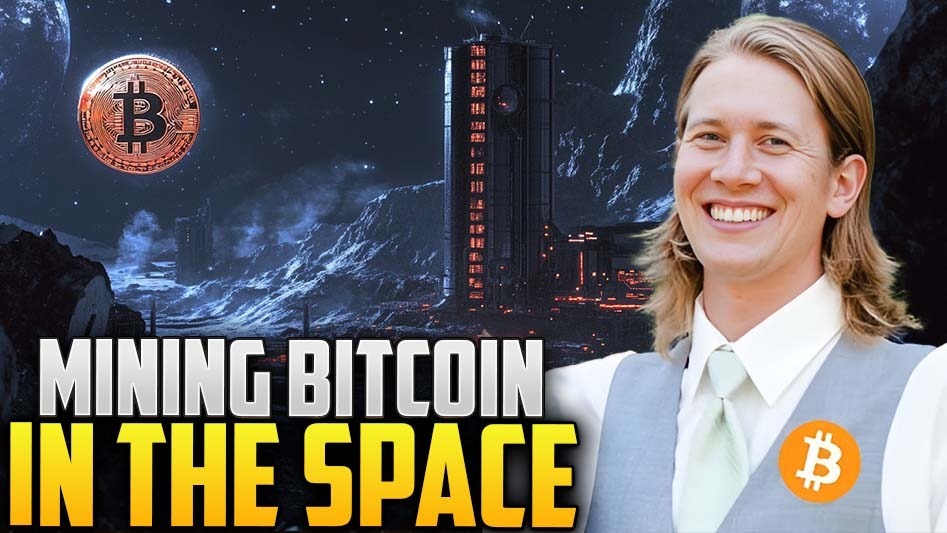
What if the future of Bitcoin mining isn’t just in the deserts of Texas or the mountains of Kazakhstan—but in outer space?
In this episode of The Bitcoin Libertarian podcast, we sit down with Nick Moran, founder and CEO of Space Race Energy, a startup on a mission to revolutionize the Bitcoin mining industry by launching satellite-based solar-powered mining rigs into orbit.
Nick believes that space holds the answer to some of Bitcoin mining’s most pressing challenges: energy access, cooling, decentralization, and scalability. His vision isn’t just about pushing hardware into orbit—it’s about creating an interplanetary Bitcoin economy and turning satellites into autonomous, off-grid money printers.
Yes, Bitcoin is going to space—and Nick is building the rocket.
Table of Contents

A Bitcoiner and Space Nerd Walk Into a Dream
Bitcoin and space. Two things that get hearts racing and imaginations firing. Nick Moran, a cryogenics and process systems expert turned Bitcoiner, decided to combine his two obsessions into a single moonshot: orbital Bitcoin mining.
From his base in Southern New Mexico, near Spaceport America and Virgin Galactic facilities, Nick is laying the groundwork for the world's first off-Earth mining operation.
Nick Moran’s Orange-Pill Journey
Nick discovered Bitcoin in 2017, like many, through the speculative mania of that bull run. But when the dust settled, what remained was an unshakable curiosity about what money truly is.
He went deep—studying monetary policy, energy markets, and geopolitics—eventually narrowing his focus to Bitcoin and Bitcoin mining. Over the years, he logged over 12,000 hours of research and hands-on experience.
By 2023, a tweet from Elon Musk about the abundance of solar energy in space sparked a lightbulb moment: why not mine Bitcoin in orbit?
That single idea would evolve into Space Race Energy.
Why Mine Bitcoin in Space?
Because space solves Bitcoin’s two biggest mining problems:
Space-based mining eliminates land, grid, and environmental constraints, allowing for true off-grid, decentralized mining at scale.
As Nick says:
“Bitcoin mining is the only technology that can monetize stranded energy—on Earth or in space.”
Unlimited Solar, Unlimited Cooling, Unlimited Potential
For decades, space agencies like NASA and ESA have toyed with the idea of space-based solar power. The problem? Inefficient and dangerous energy transfer to Earth via lasers or microwaves.
Nick’s approach is simpler:
Use that solar energy in orbit, mine Bitcoin, and transmit the digital currency back to Earth.
No energy loss. No risk. Just pure digital energy, as Michael Saylor might call it, beamed from orbit into the global financial system.
The Roadmap to Orbital Mining
Nick launched Space Race Energy in late 2024. Since then, the idea has gained traction—with interest from VCs in the U.S., London, India, and Hong Kong, plus a spotlight from Anthony Pompliano’s newsletter.
Here’s the high-level vision:

Satellites, the ISS, and a New Use for Old Space Tech
While long-term plans include a constellation of small mining satellites, Nick also has a wild—but brilliant—idea:
Retrofit the International Space Station (ISS) for mining.
The ISS is set to be decommissioned and deorbited by 2030–2032, yet it already has:
“Why crash it into the ocean when we can plug it into the Bitcoin network?”
Space Mining vs. Earth Mining
Advantages of Orbital Mining
Challenges
But as SpaceX and others drive down launch costs, the economic feasibility of space infrastructure for Bitcoin becomes more viable every year.
Bitcoin as the Reserve Currency of the Universe
What money do we use in space?
Fiat currencies don’t scale across borders—let alone across planets. Bitcoin does.
“If we’re going to Mars, we’ll need a money system that works in deep space,” Nick says.
“Why not use the most secure, decentralized, and universal one we already have?”
Nick envisions a future where Bitcoin is the interplanetary reserve currency—mined in space, spent on Earth, the Moon, and Mars.
Challenges, Timing, and the Next Frontier
Nick is realistic. This won’t happen overnight. He expects the first orbital miners to launch by 2028–2032, possibly aligning with the post-halving mining landscape.
But the foundation is being built now—through intellectual property, fundraising, and connecting with aerospace pioneers like StarCloud, who are launching data centers into orbit as early as this year.
And yes, Nick wants to go to space too—ideally to record a podcast from orbit. We’re holding him to that.

Conclusion
Bitcoin mining in space isn’t science fiction—it’s a logical next step.
As Earth-based grids become strained and the space economy accelerates, the stars are aligning for off-world mining.
Nick Moran and Space Race Energy are leading the charge. And as Bitcoin adoption grows, the incentives to mine off-Earth will only increase.
In Nick’s words:
FAQs
What is Space Race Energy?
A startup founded by Nick Moran focused on launching solar-powered Bitcoin mining satellites into orbit.
Why mine Bitcoin in space?
To access unlimited solar energy and cooling while reducing environmental and geopolitical constraints.
Is this even possible?
Yes. The patent has been filed, VC interest is rising, and technologies like satellite launches and orbital data centers are maturing.
When will this happen?
Target timeframe for first satellite: 2028–2032, potentially leveraging the decommissioned ISS.
How can I follow or support the project?
Follow Nick Moran on X (Twitter): @Nick__Moran
Or reach out via DM if you’re an aerospace engineer, space enthusiast, or Bitcoin believer.
VISIT OUR STORE

The Best Merch For Bitcoin Maxis
Visit Crox Road Store 👉🏻 https://croxroad.store/