
Can Bitcoin Slash U.S. Debt by 50%? Senator Lummis Thinks So

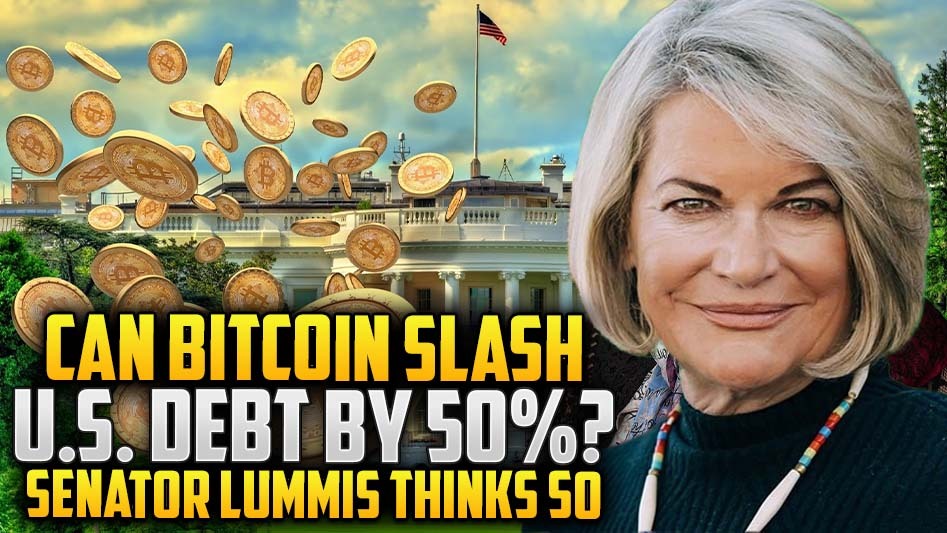
In a bold assertion that’s stirring both intrigue and skepticism, U.S. Senator Cynthia Lummis has claimed that Bitcoin could reduce the United States’ national debt by half within the next two decades. Speaking at the DC Blockchain Summit, Lummis emphasized the potential of Bitcoin as a long-term strategic asset for national financial stability. Her remarks have sparked intense debate in financial, political, and crypto circles — raising questions about whether Bitcoin could really be the answer to America's $36 trillion debt.
Table of Contents

The Pitch: Bitcoin as a Strategic Reserve Asset
Lummis proposes that the U.S. should treat Bitcoin as it does gold, oil, and even cheese — yes, the U.S. has a strategic cheese reserve. Her argument is built on three core features of Bitcoin:
“If we hold for 20 years — according to the best available models — we could reduce our national debt by half,” she stated. The idea is that by accumulating and holding Bitcoin as it appreciates, the government could offset liabilities and create a new class of national wealth.
Saylor’s Support: Bitcoin as Manifest Destiny
Joining Lummis in this vision is Michael Saylor, Executive Chairman of MicroStrategy and a high-profile Bitcoin evangelist. At the same summit, Saylor described Bitcoin as the “Manifest Destiny of the United States”, advocating for its adoption as a sovereign reserve asset.
He went even further during a separate appearance at the Digital Asset Summit, forecasting Bitcoin’s price to skyrocket to $13 million over the next 20 years. “I can’t say that about any security,” he remarked, emphasizing Bitcoin’s status as a commodity, not a security — a distinction that provides legal and regulatory advantages.
Market Reactions: A Glimpse of Influence
The market responded almost instantly. Following Saylor’s endorsement, Bitcoin saw a minor yet notable 0.11% increase, hitting $87,273.47. Its market capitalization also grew by 0.09%, while the Crypto Fear & Greed Index shifted from a neutral 50 to a “Greed” rating of 65 — reflecting growing investor confidence.
However, not all signs point upward. With a $16.5 billion options expiry looming, Bitcoin's price dipped below $90,000. This undercut bullish positions and gave Bitcoin bears a strategic edge. Many investors are also grappling with macroeconomic headwinds, including U.S. government spending cuts and an escalating global tariff war, both of which have broader implications for Bitcoin and risk assets in general.
Is This Realistic? Let’s Talk Economics
Lummis' plan is undeniably audacious. But is it economically viable?
Bitcoin's long-term appreciation might look promising, but its volatility is a double-edged sword. A nation betting on such an asset would face the risk of dramatic short-term swings — a poor fit for the conservative nature of national fiscal policy.
Moreover, unlike traditional reserves such as gold or oil, Bitcoin does not yet play a vital role in global trade or industry. Its value is largely speculative and sentiment-driven, which makes it susceptible to both hype cycles and regulatory uncertainty.

The Strategic Reserve Conundrum
Even if the U.S. were to adopt a Bitcoin Strategic Reserve, several issues remain unresolved:
Opportunities: The Case for Bitcoin
Despite these challenges, there are genuine advantages to the idea:
Risks: What Could Go Wrong?
Of course, the downside is just as real:

Conclusion
Senator Lummis' proposal is not just financial; it’s philosophical. It reflects a growing movement that sees traditional fiat systems as outdated and views Bitcoin as the cornerstone of a new economic order. While the vision is compelling, the path forward is complex, fraught with technical, regulatory, and market-based obstacles.
Whether Bitcoin can truly halve U.S. debt in 20 years remains to be seen — but the debate it has sparked is already reshaping how America thinks about money, value, and the future of economic sovereignty.
FAQs
What did Senator Cynthia Lummis say about Bitcoin and the U.S. national debt?
Senator Lummis stated at the DC Blockchain Summit that, based on existing models, holding Bitcoin as a strategic reserve could reduce the U.S. national debt by 50% over the next 20 years.
Why does Lummis consider Bitcoin a good candidate for a strategic reserve?
She cited Bitcoin’s scarcity, immutability, and digital storability, likening it to “digital gold” and suggesting it should be held alongside oil and gold reserves.
What is Michael Saylor's position on Bitcoin as a national asset?
Michael Saylor supports Lummis’ idea and predicts Bitcoin will reach $13 million in value over the next 20 years. He sees it as America’s “Manifest Destiny” and the ultimate store of value.
What are the risks of using Bitcoin to offset national debt?
The main risks include Bitcoin’s price volatility, regulatory uncertainty, cybersecurity threats, and its limited use in real-world commerce compared to traditional reserves.
How did the market react to Lummis and Saylor’s statements?
Bitcoin experienced a slight increase in price and investor sentiment improved, reflected in the Fear & Greed Index rising from 50 to 65.
VISIT OUR STORE

The Best Merch For Bitcoin Maxis
Visit Crox Road Store 👉🏻 https://croxroad.store/