
Bitcoin's Founding Mysteries: The Satoshi Nakamoto Trial and What's at Stake

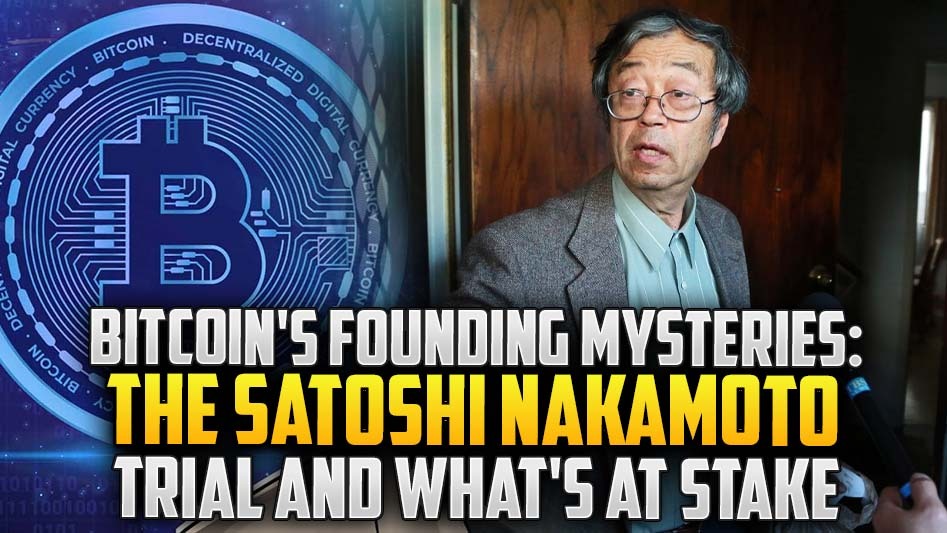
Bitcoin, the first and most well-known cryptocurrency, has always been shrouded in mystery, primarily due to its anonymous creator, Satoshi Nakamoto. The identity of Satoshi has been a subject of intense speculation and investigation since Bitcoin's inception. However, recent legal battles, particularly involving Australian computer scientist Craig Wright, have thrust these mysteries back into the spotlight. This article delves into the ongoing Satoshi Nakamoto trial and explores what's at stake for the future of Bitcoin.
Table of Contents

The Enigma of Satoshi Nakamoto
Satoshi Nakamoto is the pseudonym used by the person or group of people who developed Bitcoin. In 2008, Satoshi published the Bitcoin whitepaper, which laid out the framework for a decentralized digital currency free from government control. After contributing to the development of Bitcoin and communicating with other developers, Satoshi disappeared from the scene in 2011, leaving behind a legacy and a digital currency that would go on to revolutionize the financial world. The disappearance of Satoshi has led to numerous theories and investigations, with journalists, hackers, and enthusiasts attempting to uncover the true identity behind this pseudonym. Despite these efforts, Satoshi's identity remains one of the greatest unsolved mysteries in the tech world. This anonymity has added to the allure and mystique of Bitcoin, emphasizing its decentralized nature. Unlike traditional currencies, which are tied to governments or specific entities, Bitcoin's creator remains an enigma, reinforcing the currency's independence from conventional financial systems.
Craig Wright's Claim to the Throne
Since 2016, Craig Wright has publicly claimed to be the real Satoshi Nakamoto. Wright's assertion has been met with skepticism and controversy within the crypto community. Despite his claims, Wright has been unable to provide conclusive evidence that he is the creator of Bitcoin, leading many to question his motives and the veracity of his statements. Wright's claims have led to a polarized response, with some supporting his assertion, while others vehemently oppose it, citing a lack of cryptographic proof that would definitively link him to Satoshi's early Bitcoin transactions and writings. The controversy has sparked a broader debate about the importance of Satoshi's identity and its relevance to Bitcoin's value and principles. Wright's legal actions against those who have disputed his claims have added fuel to the fire, resulting in a series of lawsuits that have further divided the community. This legal battle has not only put Wright's claims to the test but has also raised questions about the implications of Satoshi's identity for the future of Bitcoin.
The Legal Battle Unfolds
The controversy surrounding Wright's claim has culminated in a high-profile trial in the UK High Court. The case was initiated by the Crypto Open Patent Alliance (COPA), a consortium of crypto firms seeking to challenge Wright's assertion. COPA argues that Wright's claim is baseless and that he has fabricated evidence to support his case. The trial aims to determine the legitimacy of Wright's claims and, by extension, his control over the Bitcoin brand and technology. This legal battle is not just about the identity of Satoshi Nakamoto but also about the principles and governance of Bitcoin itself. If Wright is granted control over the Bitcoin trademark and the original Bitcoin code, it could set a precedent that contradicts the decentralized ethos of Bitcoin. The trial has attracted attention from across the cryptocurrency community, with many seeing it as a pivotal moment that could define the future trajectory of Bitcoin. The implications of the trial extend beyond the courtroom, touching on issues of intellectual property, the nature of open-source software, and the ethos of the cryptocurrency movement.
What's at Stake for Bitcoin
The outcome of the trial has significant implications for the future of Bitcoin. If Wright is recognized as Satoshi Nakamoto, he could potentially assert intellectual property rights over the Bitcoin codebase, influencing its development and use. Such a scenario could lead to legal battles, forks in the blockchain, and a division within the Bitcoin community. Conversely, if Wright's claim is dismissed, it could reinforce the decentralized and collaborative nature of Bitcoin's development and ensure that no single individual can claim ownership over the open-source project. The stakes are high, as the verdict could impact the perception of Bitcoin in the eyes of the public, investors, and regulators. It could also influence future developments and innovations within the cryptocurrency space. The trial raises fundamental questions about the nature of Bitcoin: Is it a collaborative project owned by the community, or can an individual claim ownership over its creation? The resolution of this legal battle could set a precedent for how intellectual property rights are viewed in the context of decentralized technologies and open-source projects.

Testimonies from Bitcoin's Early Developers
The trial has seen testimonies from several key figures in the early development of Bitcoin, including Adam Back, Mike Hearn, Martti Malmi, and Zooko Wilcox-O’Hearn. These individuals have provided insights into the early days of Bitcoin and its founding principles. Their testimonies aim to refute Wright's claims and shed light on the collaborative efforts that led to the creation of the cryptocurrency. The testimonies of these early developers are crucial, as they offer a firsthand account of Bitcoin's origins and the collective effort involved in its creation. They challenge the notion that a single individual, such as Wright, could claim sole credit for the development of Bitcoin. The involvement of these prominent figures highlights the importance of the trial in the broader context of Bitcoin's history and future. Their perspectives underscore the collaborative nature of open-source projects and the collective ownership that defines the spirit of the cryptocurrency community.
The Future of Bitcoin and Its Founding Mysteries
Regardless of the trial's outcome, the mysteries surrounding Bitcoin's founding are likely to persist. The identity of Satoshi Nakamoto remains one of the greatest enigmas of the digital age. However, the trial serves as a reminder of the principles upon which Bitcoin was founded: decentralization, transparency, and community. As the legal battle unfolds, the crypto community continues to watch closely, understanding that the stakes extend far beyond the courtroom and into the very heart of what Bitcoin represents. The Satoshi Nakamoto trial is more than just a legal dispute; it is a reflection of the ongoing struggle to define the identity and values of the cryptocurrency movement. Whether or not Craig Wright is declared Satoshi Nakamoto, the trial underscores the enduring mysteries and challenges that surround the world's first cryptocurrency. As Bitcoin continues to evolve and grow, the questions raised by this trial will remain relevant, shaping the discourse around digital currencies and their place in the broader financial landscape.
Conclusion
The Satoshi Nakamoto trial, centered around Craig Wright's controversial claim to be the creator of Bitcoin, encapsulates the ongoing debates and mysteries surrounding the origins and future of Bitcoin. Regardless of the trial's outcome, the core principles of Bitcoin – decentralization, transparency, and community – remain untouched. This legal battle not only tests the claims of an individual but also challenges the community to reflect on the values that underpin the cryptocurrency world. As the crypto community watches the unfolding of this trial, it serves as a pivotal moment that may shape the perception and evolution of Bitcoin for years to come.

FAQs
Who is Satoshi Nakamoto?
Satoshi Nakamoto is the pseudonym used by the unknown person or group of people who developed Bitcoin, authored the Bitcoin white paper, and created and deployed Bitcoin's original reference implementation.
What is the Satoshi Nakamoto trial about?
The Satoshi Nakamoto trial involves Australian computer scientist Craig Wright, who claims to be the real Satoshi Nakamoto. The trial aims to determine the legitimacy of his claims and the potential implications for the Bitcoin codebase and intellectual property rights.
What are the implications of the trial for Bitcoin?
If Craig Wright is recognized as Satoshi Nakamoto, he could potentially assert intellectual property rights over Bitcoin, affecting its development and use. If his claim is dismissed, it could reinforce Bitcoin's decentralized and collaborative nature.
Why is the identity of Satoshi Nakamoto important?
The identity of Satoshi Nakamoto is significant due to the impact of Bitcoin on the financial world and the principles of decentralization and anonymity it represents. However, many argue that Bitcoin's decentralized nature makes the identity of its creator irrelevant.
What will happen if Craig Wright is proven to be Satoshi Nakamoto?
If Craig Wright is proven to be Satoshi Nakamoto, he may gain control over the Bitcoin trademark and original codebase, potentially leading to legal and developmental implications for Bitcoin.
VISIT OUR STORE

The Best Merch For Bitcoin Maxis
Visit Crox Road Store 👉🏻 https://croxroad.store/