
2 Arrested in Hong Kong for Allegedly Stealing Electricity to Mine Bitcoin

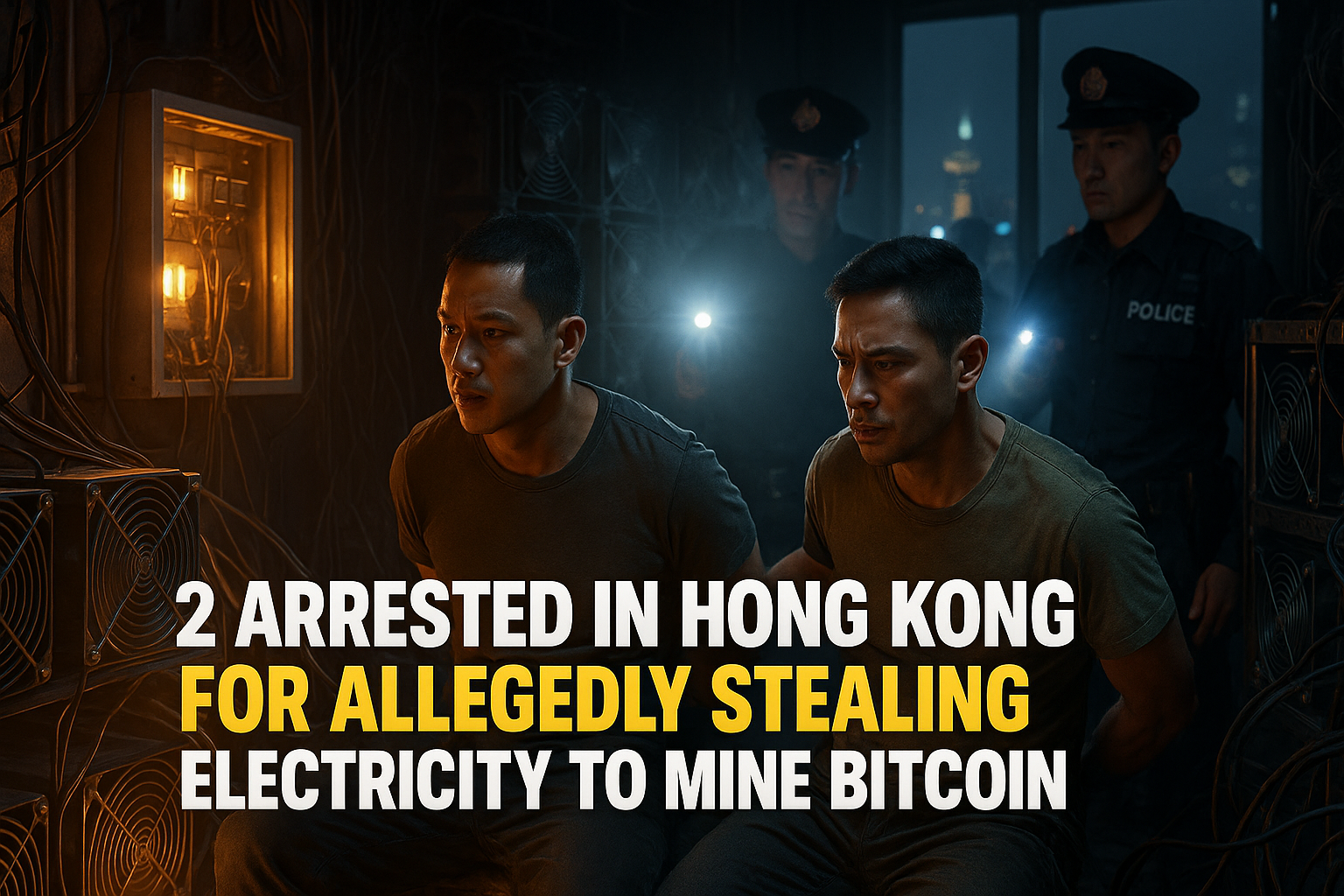
Bitcoin mining has long been associated with high energy consumption, but in Hong Kong, two individuals allegedly took illegal shortcuts to power their crypto operations. Police recently arrested two technicians accused of stealing electricity and internet services from care homes to secretly mine Bitcoin. The incident has raised fresh concerns about the ethics, risks, and legal consequences of cryptocurrency mining in unauthorized locations.
Table of Contents

The Arrest
Authorities confirmed that two men, aged 32 and 33, were taken into custody after police raids revealed eight hidden Bitcoin mining machines. The rigs were stashed inside suspended ceilings at two separate care homes—five in Sham Shui Po and three in Kwun Tong.
The discovery followed complaints from the institutions, which reported unusually high electricity bills and persistent internet slowdowns. Investigators later uncovered that the suspects had illegally tapped into the homes’ utilities to fuel their mining equipment.
How the Scheme Worked
The miners allegedly connected their devices directly to the care homes’ electrical and internet systems. By doing so, they avoided the substantial costs usually associated with Bitcoin mining, which demands powerful hardware and significant amounts of energy.
The Impact on Care Homes
The crime did not just cost the care homes extra money; it also placed vulnerable communities at risk. Care homes serve individuals with disabilities and often operate under tight budgets. The diverted electricity and degraded internet quality may have directly impacted their ability to deliver essential services.
This has intensified public outrage, with critics pointing out that exploiting institutions meant to care for the disabled highlights a disturbing lack of ethics in the pursuit of Bitcoin profits.

Legal Consequences
In Hong Kong, theft of electricity is a serious offense. If convicted, the arrested men could face imprisonment and heavy fines. Beyond the criminal charges, the case also highlights how law enforcement is becoming increasingly vigilant about crypto-related crimes, particularly those involving theft of utilities.
Broader Implications for Bitcoin Mining
The incident underscores a growing global issue: unauthorized Bitcoin mining operations that exploit stolen electricity. From universities to factories, there have been multiple cases worldwide where individuals have secretly mined cryptocurrency using resources not meant for such activity.
This raises important questions:

Conclusion
The Hong Kong arrests reveal the darker side of Bitcoin mining—where profit motives can lead to theft, endanger public safety, and harm vulnerable institutions. While cryptocurrency offers innovation and financial opportunities, cases like this reinforce the need for responsible practices, legal compliance, and ethical boundaries in the crypto industry.
FAQs
Why is electricity theft common in Bitcoin mining?
Because mining is energy-intensive and expensive, some individuals attempt to bypass costs by illegally tapping into existing power supplies.
How were the miners discovered in Hong Kong?
The care homes noticed inflated power bills and slower internet speeds, which prompted an investigation.
What penalties do electricity theft offenders face in Hong Kong?
Convicted offenders may face imprisonment and significant fines, depending on the scale of the theft.
How does unauthorized mining affect victims?
It raises their utility bills, disrupts operations, and may create fire hazards from poorly installed equipment.
VISIT OUR STORE

The Best Merch For Bitcoin Maxis
Visit Crox Road Store 👉🏻 https://croxroad.store/